



Guide · guides

    Heat pumps and EPC ratings: what actually changes on the certificate

    A heat pump nearly always improves the environmental impact rating on an EPC. Whether it improves the headline energy rating too depends on the fabric it is heating.

    11 min readBy Nabhan Islam Reviewed by Awais Sarwar, MSc Updated 6 Sept 2026
    Heat pumps and EPC ratings: what actually changes on the certificate
    AudiKiaGB NewsBudgens
    The short answer

    Installing a heat pump almost always improves the environmental impact (CO2) rating shown on an EPC, because RdSAP treats electricity generation as increasingly low-carbon and heat pumps are highly efficient at converting electricity to heat. The effect on the headline energy efficiency rating is less predictable: it depends on the cost per unit of running the system compared with the previous fuel, and on how well insulated the property is, since a heat pump working hard to heat a poorly insulated home can produce a similar or even worse running-cost score than an efficient gas boiler did. MCS installation certificates are essential evidence for the assessor.

    020 3092 8551

    What almost always improves

    Environmental impact (CO2) rating

    What is not guaranteed

    Energy efficiency (cost) rating

    Key evidence needed

    MCS certificate

    confirms model, output and installation date

    Most influential co-factor

    Fabric insulation standard

    poor fabric can offset the gain

    Two different scores, two different stories

    Every EPC shows two ratings: the energy efficiency (SAP) rating, which is driven by the estimated cost of running the property's heating, hot water and lighting, and the environmental impact rating, which is driven by estimated carbon dioxide emissions. These two scores usually move together but not always, and heat pumps are the clearest example of where they can diverge. A heat pump converts a unit of electricity into several units of heat, so its carbon output per unit of heat delivered is low, particularly as grid electricity itself has become progressively less carbon-intensive — which is why the environmental impact rating benefits reliably. The energy efficiency rating, by contrast, is sensitive to the price of electricity relative to gas, and electricity has historically cost more per kilowatt hour than gas, so the cost-based score does not automatically improve just because the carbon score has.

    • Energy efficiency rating: driven by estimated running cost
    • Environmental impact rating: driven by estimated carbon emissions
    • Heat pumps use electricity, which is priced differently to gas per unit of delivered heat
    • A carbon improvement and a cost improvement are not the same thing and can move in opposite directions

    Why fabric still decides the outcome

    A heat pump's efficiency is expressed as a coefficient of performance, meaning it delivers more heat energy than the electrical energy it consumes, but that efficiency only holds if the heat pump is not fighting a losing battle against an uninsulated, draughty building. In a poorly insulated solid-wall house with single glazing, a heat pump has to run for longer, at a higher flow temperature, to hold the same internal temperature that a gas boiler previously achieved more cheaply, and RdSAP's standardised assumptions will reflect that reality in the cost-based rating. This is why fabric-first retrofit is the accepted sequence: insulate and draught-proof first, so the heat pump is sized correctly and runs efficiently, rather than installing a heat pump into a leaky building and hoping the technology alone fixes the score.

    • Insulation reduces the heat demand the heat pump has to meet
    • Correctly sized radiators or underfloor heating let the heat pump run at a lower, more efficient flow temperature
    • A poorly insulated home can see little or no improvement, or occasionally a worse energy efficiency score, after a heat pump is fitted
    • Ground source systems are generally more efficient than air source but cost significantly more to install


    The buildings behind this advice

    AudiKiaGB NewsBudgensPepe's Piri PiriCar Giant

    Air source vs ground source for EPC purposes

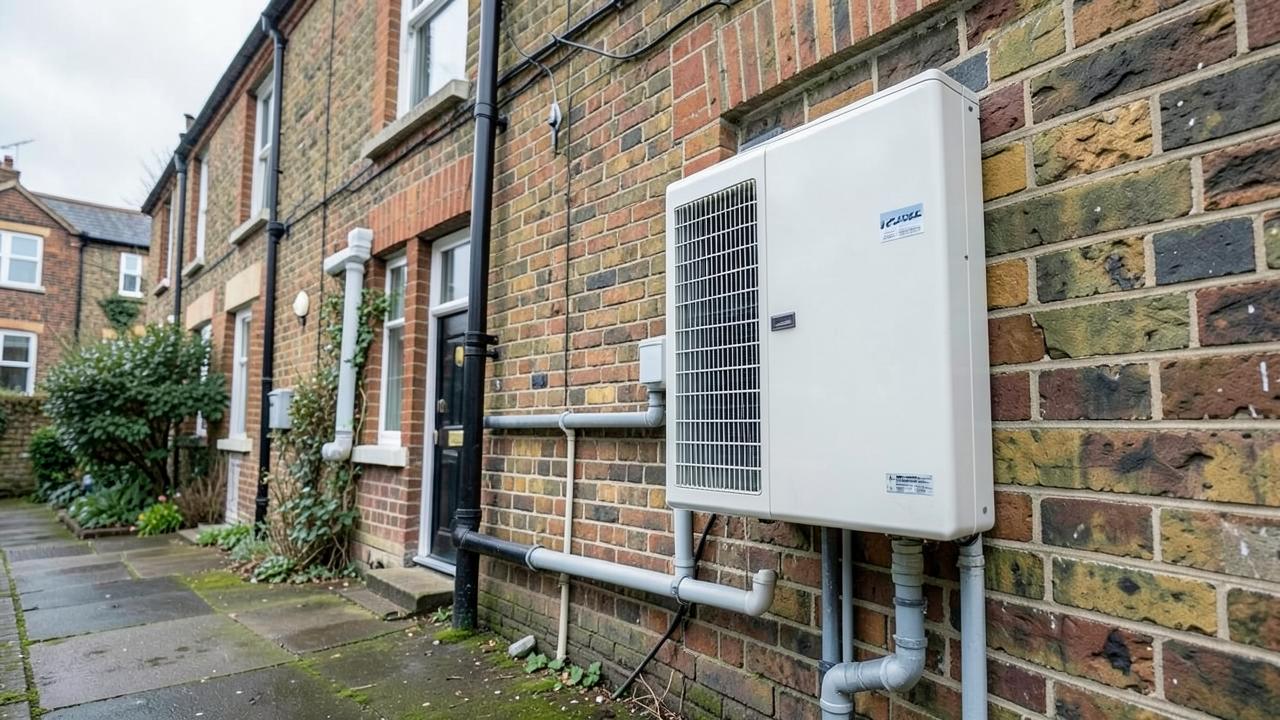
    Air source heat pumps extract heat from outside air and are by far the more common installation in UK homes, being cheaper to install and requiring only an external unit rather than ground works. Ground source heat pumps extract heat from buried loops or boreholes, achieve a higher and more stable coefficient of performance because ground temperature varies less than air temperature through the year, but cost substantially more to install because of the excavation or drilling required. Both types are recorded in RdSAP using their rated efficiency, so the certificate will reflect a ground source system's typically higher efficiency figure, but the extra installation cost rarely makes ground source the right choice purely for an EPC band improvement.

    Evidence the assessor needs

    Heat pumps are recorded in RdSAP using data such as the manufacturer, model, rated output and efficiency, which the assessor needs documented evidence for rather than a general description from the homeowner. An MCS (Microgeneration Certification Scheme) installation certificate is the standard form of evidence and should be kept alongside the building regulations compliance certificate issued for the installation. Where a system was installed under a grant scheme such as the Boiler Upgrade Scheme, the paperwork retained for that application is usually sufficient too.

    Evidence to have ready for the assessor

    • MCS installation certificateStates make, model and rated output
    • Building regulations compliance certificateConfirms the work was signed off
    • Manufacturer's technical data sheetBacks up efficiency figures if needed
    • Boiler Upgrade Scheme confirmationIf a grant was used, useful supporting record

    What we see on assessments across London and the Home Counties

    In practice, heat pumps installed into recently built or well-retrofitted homes with good fabric and correctly sized emitters produce a clear improvement across both ratings, often moving properties comfortably into band B or A on the environmental impact score. In older stock, particularly solid-wall Victorian and 1930s houses without prior fabric upgrades, we more often see the environmental impact rating improve noticeably while the energy efficiency rating moves only slightly, stays flat, or occasionally dips relative to an efficient modern gas boiler, purely because of the relative cost of electricity versus gas built into the standard RdSAP fuel price assumptions used at the time of assessment.

    • Well-insulated new-build or retrofitted homes: strong improvement on both scores is typical
    • Older solid-wall homes with no prior fabric work: environmental score improves, cost score is variable
    • Undersized radiators left in place after a heat pump switch: efficiency losses that show up as poor real-world performance and can be visible in the assessment
    • Hybrid systems (heat pump plus existing boiler) need to be recorded correctly or the model will misrepresent actual running patterns

    Landlords weighing heat pumps against MEES

    For landlords working towards EPC C for MEES compliance, a heat pump is not automatically the most cost-effective single measure, because its main strength on the certificate is the carbon score, while MEES compliance is driven by the overall energy efficiency band. Cheaper fabric measures — loft insulation, cavity wall insulation where applicable, heating controls, and low-energy lighting — often move the energy efficiency rating further per pound spent than a heat pump does on a property that has not yet had those improvements. A heat pump is more likely to be the measure that finishes the job on an already well-insulated property that is a band or two short of C, rather than the first thing to install on an unimproved one.

    MeasureTypical costEffect on energy efficiency rating
    Loft insulation top-up£300-£600Small-moderate, cheap per point gained
    Heating controls (TRVs, programmer)£200-£500Small but reliable gain
    Cavity wall insulation (where applicable)£500-£1,500Moderate gain
    Air source heat pump£7,000-£13,000 (after grant where eligible)Variable, fabric-dependent
    Indicative ranges only; always confirm with a site-specific quote and current assessment.

    Common misunderstandings worth correcting

    The most common misunderstanding we encounter is a homeowner expecting a straightforward one-for-one improvement simply because a heat pump is a low-carbon technology, without appreciating that RdSAP's headline rating is a cost model, not a carbon model. The second is assuming the assessor can simply see the outdoor unit and infer the specification; without an MCS certificate the assessor has no reliable data on the rated efficiency and cannot enter anything beyond a generic default, which understates the benefit. The third is installing a heat pump but leaving old, undersized radiators in place, which limits real-world performance and can be reflected in a lower recorded efficiency than the unit is technically capable of.

    Written by

    Nabhan Islam

    Head of Marketing & Commercial Lead

    Reviewed by

    Awais Sarwar, MSc

    Accredited Energy Assessor — Accredited domestic and commercial energy assessor, listed on the EPC Register

    11 min readLast reviewed 6 September 2026Facts verified 6 September 2026 Checked quarterly

    Sources

    1. The Energy Performance of Buildings (England and Wales) Regulations 2012 legislation.gov.uk
    2. Find an energy certificate GOV.UK
    3. Microgeneration Certification Scheme MCS
    4. Energy Saving Trust — home energy advice Energy Saving Trust

    Was this page helpful?

    Frequently asked questions

    Call
    Last word

    Ready when you are.

    Quote in 60 seconds. Assessor on site this week. Compliant report in your inbox within 24 hours. That's the whole process.

    020 3092 8551
    Transparent pricing No obligation 1,000+ assessments 100% compliance guarantee
    Awais Sarwar
    — Awais Sarwar, MSc
    MD · 4.9 Google
    4.9 rated
    ·100+ reviews·
    Direct provider
    Call