
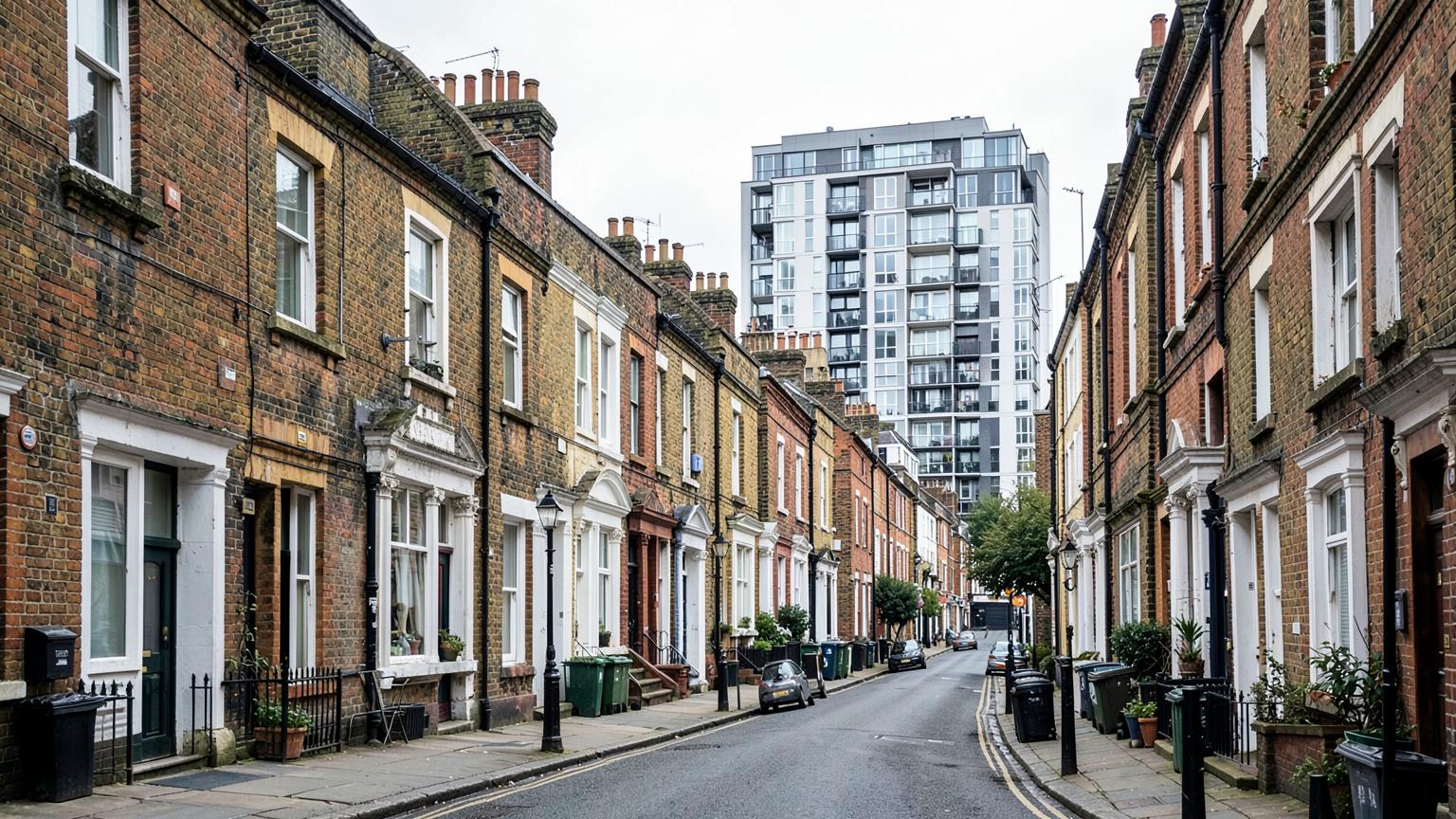




Housing stock in Islington
Islington's housing stock is overwhelmingly Georgian and Victorian terraced conversions, split into two, three or four flats above ground-floor retail along Upper Street, Holloway Road and Essex Road, typically with solid brick walls and single glazing that is often protected by conservation-area status. Purpose-built blocks tend to be small, four to six storeys, built between the 1930s and 1970s, generally with cavity walls that can often be filled to improve the rating. Highbury and Canonbury contain larger family houses converted into upper-floor maisonettes and flats, often with loft conversions added without matching insulation. New-build development is limited and concentrated around King's Cross, typically achieving band B or C under SAP.
Landlord rules and licensing in Islington
Islington's rented flats must meet the MEES minimum of band E, and the proposed tightening to band C for new tenancies by 2030 will be a real challenge for the borough's solid-walled period conversions. A valid EPC is required for HMO licences under Islington's additional licensing scheme, and scheme boundaries and renewal dates change, so confirm the current position with Islington Council before submitting an application. We produce our reports so they support a licence submission under whichever scheme is live at the time.
What we commonly find here
- Solid Georgian and Victorian brick walls with no cavity to fill in Upper Street and Holloway Road conversions
- Original single-glazed timber sash windows retained under conservation-area restrictions
- Loft extensions in Highbury and Canonbury added without a corresponding insulation upgrade
- Cavity walls in 1930s-1970s blocks that could often be filled to improve the rating
- Older non-condensing boilers still in service in pre-war conversions
- Garden-level flats with solid floors and limited natural light affecting the overall assessment
Working in Islington
Upper Street, Angel and Holloway are controlled parking areas throughout the day, and the whole borough falls inside ULEZ, so we generally allow extra time to park and walk in rather than expect a bay directly outside. Travel is priced from our Wembley base by actual driving distance. A domestic EPC visit typically takes 20-45 minutes, and independent letting agents managing much of Islington's converted stock can usually confirm access details at booking. Certificates are lodged on the EPC Register the same or next working day.
Upper Street and Holloway Road's shopfront conversions
Upper Street, Holloway Road and Essex Road carry a dense run of Georgian and Victorian terraces with retail at ground floor and one, two or occasionally three flats stacked above. Each flat needs its own domestic EPC, and the ground-floor retail unit needs a separate commercial EPC, since a change of shop tenant or a re-let of the flat above triggers the requirement independently for each. Because these parades have a high rate of retail turnover, we are frequently asked to produce a commercial EPC for the shop at the same time as a domestic one for the flat above, and doing both in a single visit is usually straightforward to arrange.
- Separate domestic and commercial EPCs required for shopfront and flats above
- High retail turnover on these parades meaning commercial EPCs are needed relatively often
New-build flats meeting current SAP standards
A number of Islington's purpose-built 1930s to 1970s blocks have had communal boiler replacements, loft insulation upgrades or double glazing installed under phased improvement programmes, and where a full record of what was installed and when is not available, we base the assessment on what we can directly observe on the day rather than relying on an outdated survey that may predate later works. Newer infill development within the borough is assessed under SAP for new builds rather than RdSAP and, built to current Building Regulations insulation and heating standards, typically achieves a materially higher rating than the surrounding older stock.
Highbury and Canonbury's garden-level flats
The large Victorian houses of Highbury and Canonbury have generally been converted into upper-floor flats and maisonettes with a self-contained garden-level flat beneath. These garden-level flats often retain original solid brick walls and smaller single-glazed windows for light rather than ventilation, and combined with a compact floor area this can leave them at a similar or occasionally lower rating than the larger flats above unless individual heating and glazing upgrades have been carried out. We record the heating system, glazing and insulation for each flat in the conversion separately, since assuming consistency across a converted house is one of the most common sources of an inaccurate EPC.
- Garden-level flats with original solid walls and smaller single-glazed windows
- Heating, glazing and insulation recorded separately for each flat within a converted house
What an EPC costs in Islington
Indicative EPC prices in Islington
| Property | Typical scope | Price from |
|---|---|---|
| Flat above shop, Upper Street or Holloway Road | Domestic EPC for the flat only | from £50 |
| Shop unit, Upper Street or Holloway Road | Commercial EPC | from £150 |
| Purpose-built 1930s-70s block flat | Domestic EPC, RdSAP assessment | from £50 |
| Garden-level flat conversion, Highbury or Canonbury | Domestic EPC with individual glazing and heating survey | from £50 |
| HMO conversion, Finsbury Park or Archway | Domestic EPC for HMO licence application | from £45 |
When you need an EPC in Islington
A valid Energy Performance Certificate is required before a home in Islington is marketed for sale or let, and it lasts ten years. Under the Minimum Energy Efficiency Standard a rented home must reach at least band E, and the government has proposed raising that to band C for rented homes by 2030, so a current certificate is also the starting point for planning upgrades. New builds and material conversions need SAP calculations at design stage and an on-completion EPC, and commercial premises need a non-domestic certificate produced on the same basis.