
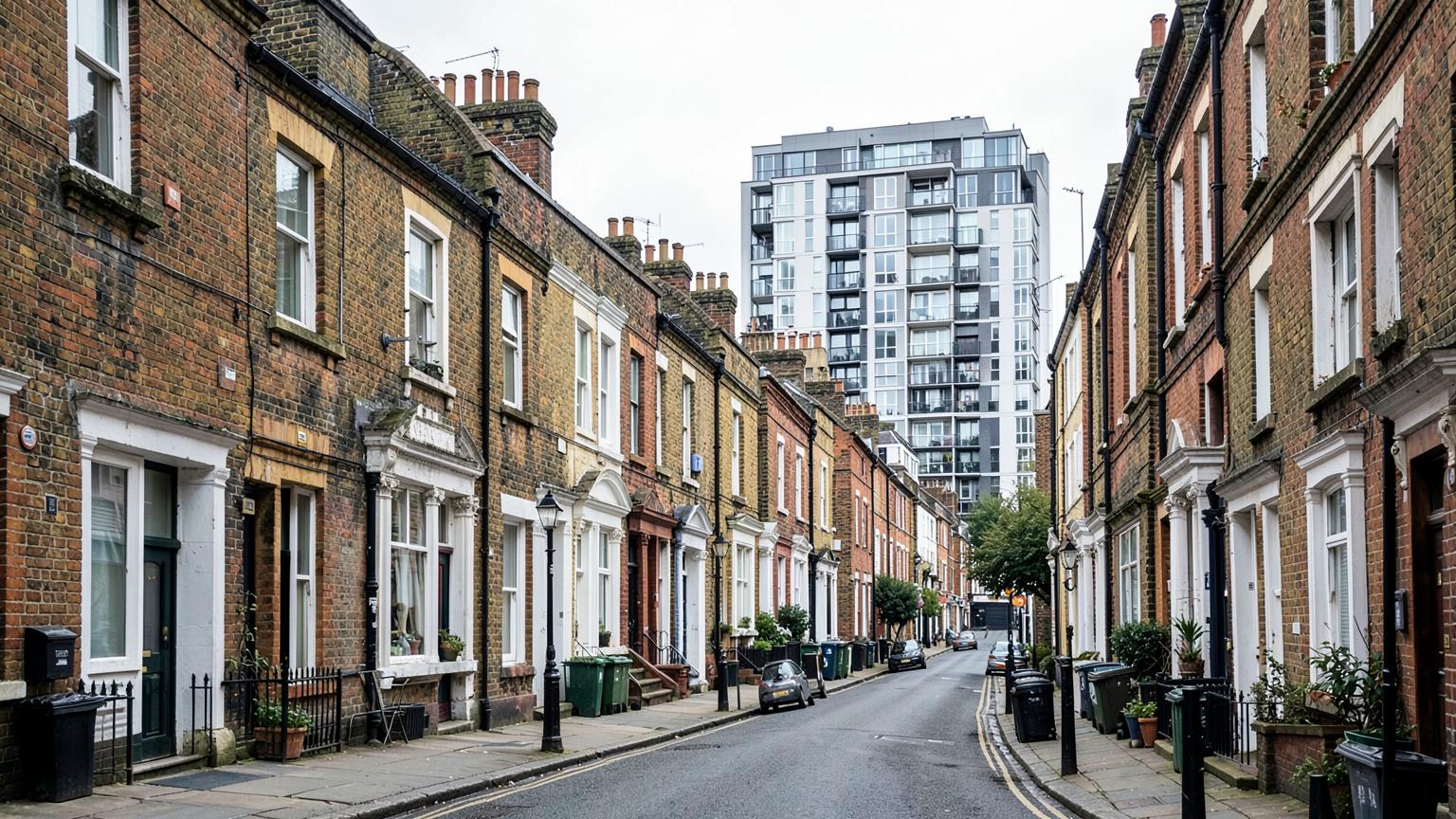




Housing stock in Newham
East Ham, Forest Gate and Plaistow contain dense stocks of Victorian and Edwardian terraced houses, a large proportion converted into licensed HMOs, generally solid-walled with older gas boilers that keep individual ratings in band D or E. Stratford has been transformed since the 2012 Olympics into a cluster of tall new-build residential towers with modern insulation and glazing, typically reaching band B or C. Beckton and the Royal Docks add more recent mid-rise development built on former industrial and dockland land, generally well-insulated. Canning Town retains a mix of post-war estate blocks with electric or communal heating and newer regeneration schemes side by side.
Landlord rules and licensing in Newham
Newham's rented properties must meet the MEES minimum of band E, and the proposed rise to band C for new tenancies by 2030 is a significant issue given the scale of older HMO stock in the borough. An EPC is required for both the additional HMO licensing and the selective licensing that Newham operates borough-wide for privately rented properties, reflecting the exceptionally high proportion of shared and rented housing here. Landlords should assume licensing applies to almost any rented property in the borough unless told otherwise, and confirm current fees and conditions with the council directly.
What we commonly find here
- Solid-walled Victorian HMOs in East Ham with older, less efficient gas boilers
- New-build Stratford towers reaching band B or C under SAP
- Electric or communal heating in Canning Town estate blocks
- Single glazing retained in older terraced HMO conversions
- Overcrowded HMO layouts where heat loss is spread across many small rooms
- Communal heating meters in HMOs complicating individual room assessment
Working in Newham
Newham sits within ULEZ, and parking around East Ham and Forest Gate is generally easier than inner London, though Stratford town centre can be busier around the shopping centre. Travel is priced from our Wembley base by actual driving distance. A domestic EPC visit is typically 20-45 minutes, and we work with a large number of specialist HMO landlords and agents used to licence-ready reporting. Certificates are lodged on the EPC Register the same or next working day, prioritised where a live or upcoming licence application depends on it.
Stratford's tower cluster and the Olympic Park legacy
The cluster of residential towers around Stratford, Stratford High Street and the fringes of the Queen Elizabeth Olympic Park has grown rapidly since 2012, and most flats here are assessed under RdSAP against a specification that varies block to block depending on when it was built and what heating system was installed. Many of these towers run on a communal heat network rather than individual boilers, which changes how the assessment records heating efficiency and standing charges, and we ask the managing agent for heat interface unit details and any as-built energy specification before the visit so the certificate reflects the building as designed rather than guesswork on site.
- Confirming communal heat network details before the visit
- Recording heat interface unit efficiency correctly under RdSAP
- Checking glazing specification and insulation against the as-built energy statement
East Ham and Manor Park's Victorian terrace HMOs
East Ham, Manor Park and the streets around Green Street have one of the densest concentrations of converted Victorian terraces in London, a large share let as HMOs to accommodate demand near the District and Hammersmith & City lines. Many of these terraces were subdivided decades ago with solid brick walls, single glazing replaced piecemeal over the years, and a gas boiler serving only part of the building, so an EPC assessor needs to record each flat's actual heating and hot water arrangement rather than assume a single specification for the whole house. Where a landlord needs an EPC for each let unit to satisfy an HMO licence application, we schedule each flat separately so certificates are lodged individually against their own address.
- Solid brick walls and mixed glazing ages recorded flat by flat
- Individual heating and hot water systems assessed per let unit
- Separate EPCs lodged for each self-contained HMO flat
Canning Town and the Royal Docks regeneration
Canning Town and the Royal Docks have seen a wave of new mid-rise and high-rise residential development built on former industrial and dockland land, much of it delivered under SAP for new build rather than RdSAP, since these are newly constructed dwellings assessed against the design stage energy specification. These buildings tend to perform well on paper — good levels of insulation, efficient heating, and often mechanical ventilation with heat recovery — but a first assessment after handover is still worth doing properly, because as-built details such as final glazing specification or ventilation commissioning can differ slightly from the design intent used for the predicted rating. Access across the docks estate can also involve barrier-controlled roads and estate management sign-in, which we factor into the visit time.
What an EPC costs in Newham
Indicative EPC prices in Newham
| Property | Typical scope | Price from |
|---|---|---|
| Victorian terrace HMO flat, East Ham or Manor Park | Domestic EPC, individual let unit for HMO licence | from £45 |
| New-build flat, Stratford tower | SAP calculation and EPC, new-build residential | from £75 |
| New-build block, Royal Docks or Canning Town | SAP-based EPCs, multi-unit new-build development | from £65 per plot |
| Terraced house converted to 2-3 flats, Forest Gate | Domestic EPC per flat, sale or let | from £45 |
| Small commercial unit, Green Street | Commercial EPC | from £150 |
When you need an EPC in Newham
A valid Energy Performance Certificate is required before a home in Newham is marketed for sale or let, and it lasts ten years. Under the Minimum Energy Efficiency Standard a rented home must reach at least band E, and the government has proposed raising that to band C for rented homes by 2030, so a current certificate is also the starting point for planning upgrades. New builds and material conversions need SAP calculations at design stage and an on-completion EPC, and commercial premises need a non-domestic certificate produced on the same basis.