
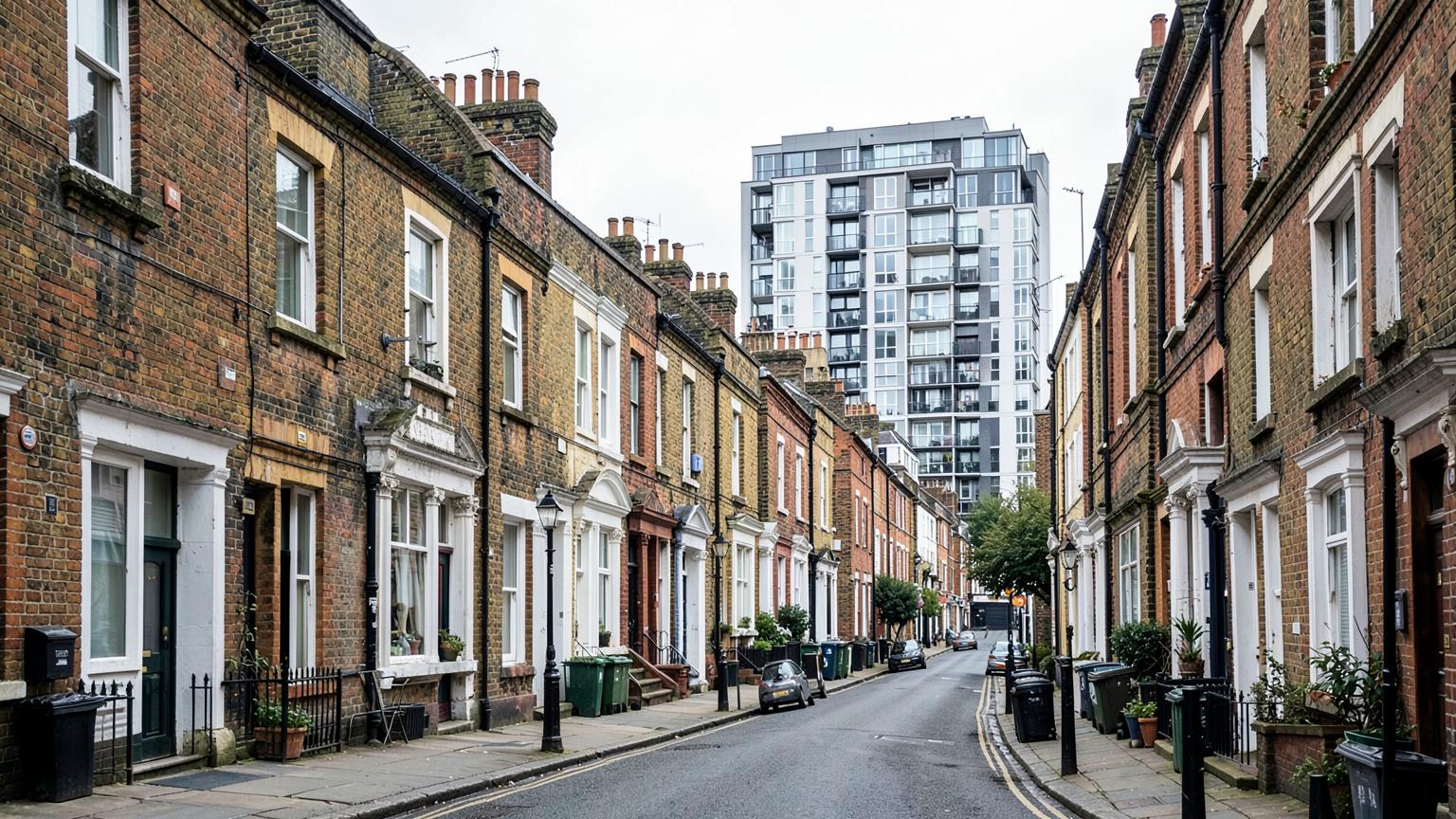




Housing stock in Wandsworth
Battersea, Clapham Junction and Tooting are dominated by Victorian and Edwardian terraces converted into flats, generally solid-walled with single glazing, and a meaningful number converted further into HMOs with older heating systems. Nine Elms and the riverside around Battersea Power Station have seen large-scale high-rise regeneration over the past decade, producing tall towers with modern insulation and glazing that typically achieve band B or C. Putney retains a mix of mansion blocks and Victorian conversions along the river, while Tooting and Balham are more heavily HMO-concentrated. Older estate blocks scattered through Battersea and Roehampton generally rely on electric or communal heating.
Landlord rules and licensing in Wandsworth
Wandsworth's rented homes must meet the MEES minimum of band E, and the proposed rise to band C for new tenancies by 2030 is likely to be more achievable in the newer Nine Elms towers than in the borough's solid-walled Victorian conversions. An EPC is required for HMO licence applications, and Wandsworth has historically taken a more limited approach to additional licensing than some neighbouring boroughs, though thresholds and any localised schemes should be confirmed directly with the council before an application, since positions can change.
What we commonly find here
- Solid-walled Victorian terraces in Battersea and Tooting with single glazing
- Nine Elms towers reaching band B or C thanks to modern insulation and glazing
- HMO conversions in Tooting and Balham with older, less efficient boilers
- Mansion blocks in Putney with original timber windows and limited insulation options
- Electric or communal heating in Roehampton estate blocks
- Rear extensions in converted terraces without matching insulation upgrades
Working in Wandsworth
Battersea, Clapham Junction and Tooting have controlled on-street parking through most of the day, and the borough sits within ULEZ; Nine Elms developments generally provide dedicated visitor parking or nearby facilities. Travel is priced from our Wembley base by actual driving distance, with the central London access charge applying where relevant. A domestic EPC visit is typically 20-45 minutes, and we often assess several flats for the same managing agent in a single visit window to keep reporting consistent. Certificates are lodged on the EPC Register the same or next working day.
Battersea and Nine Elms's new-build towers
The Nine Elms and Battersea Power Station development has introduced one of the largest concentrations of new-build residential towers in London within a single decade, most assessed under SAP for new build using the design stage energy specification produced by the development's SAP assessor. Because several buildings in this area share a district energy centre or communal plant, an EPC sometimes needs to establish what proportion of heating demand is met centrally, which affects the predicted energy cost figures on the certificate. We ask developers or managing agents for the site-wide energy strategy where one exists, since a flat assessed without it can understate genuine communal efficiency gains.
- Shared district energy centres affecting predicted heating cost figures
- SAP design-stage data cross-checked against as-built specification
Tooting and Balham's Victorian conversion stock
Tooting and Balham retain long runs of Victorian and Edwardian terraces converted into flats, many close to the Northern line and heavily let to young professionals and students, which keeps turnover and re-certification demand high given EPCs are valid for 10 years but a change of tenancy often prompts a fresh check. The typical RdSAP finding here is solid brick walls with no cavity to insulate, a mix of original single glazing and later double glazing across different flats in the same building, and gas central heating installed at conversion stage that has since been part-replaced. Balham's mansion blocks add a further layer, with communal heating arrangements that need recording accurately rather than assumed from a similar building nearby.
- Solid brick walls with limited retrofit insulation options
- Mixed glazing ages recorded per flat rather than per building
- Communal heating arrangements in mansion blocks assessed on their own evidence
Putney and Roehampton's estates and riverside blocks
Putney's riverside frontage combines older mansion blocks with newer apartment schemes, while Roehampton is home to some of London's most significant post-war estate architecture, including large system-built and in-situ concrete blocks with communal heating and district-level plant. These estates were built to an energy standard appropriate to their era, and where refurbishment has since added external wall insulation, replacement glazing or a new communal boiler, an updated EPC is worth commissioning since the rating band can move meaningfully once genuine retrofit work is reflected. Riverside blocks nearer the Thames can also have restricted vehicle access at peak towpath and event times, which we factor into scheduling.
What an EPC costs in Wandsworth
Indicative EPC prices in Wandsworth
| Property | Typical scope | Price from |
|---|---|---|
| New-build flat, Nine Elms or Battersea Power Station | SAP calculation and EPC, new-build residential | from £75 |
| Victorian terrace conversion flat, Tooting or Balham | Domestic EPC, sale or let | from £45 |
| Mansion block flat, Balham or Putney | Domestic EPC with communal heating assessment | from £50 |
| Post-war estate flat, Roehampton | Domestic EPC, communal heating and insulation review | from £55 |
| HMO conversion, Tooting | Domestic EPC per let unit, licence-ready | from £45 |
When you need an EPC in Wandsworth
A valid Energy Performance Certificate is required before a home in Wandsworth is marketed for sale or let, and it lasts ten years. Under the Minimum Energy Efficiency Standard a rented home must reach at least band E, and the government has proposed raising that to band C for rented homes by 2030, so a current certificate is also the starting point for planning upgrades. New builds and material conversions need SAP calculations at design stage and an on-completion EPC, and commercial premises need a non-domestic certificate produced on the same basis.