
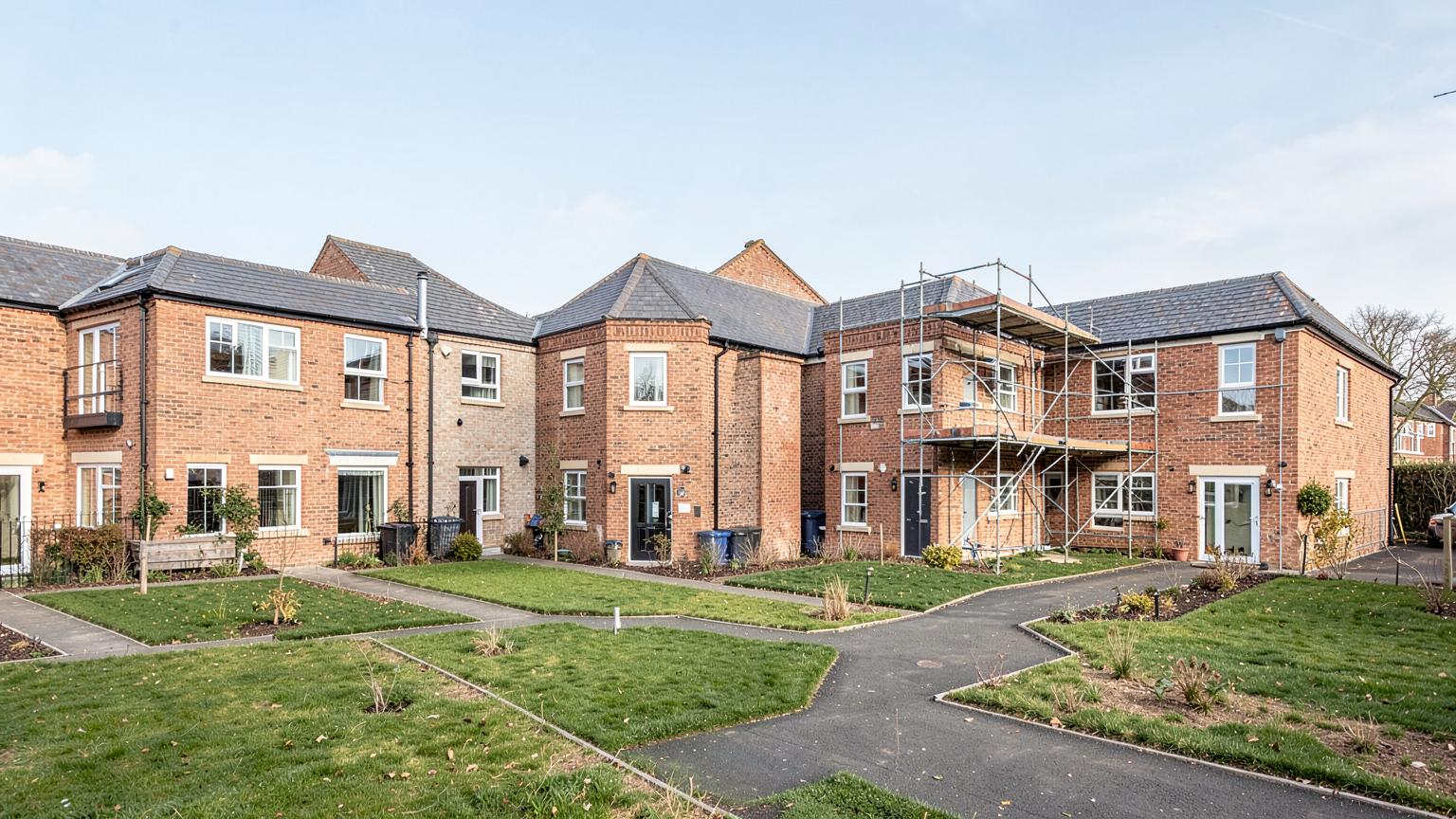




What makes a new-build EPC different
New dwellings are certified using the on-construction EPC methodology, built from the as-built SAP calculation rather than the physical inspection used for existing homes under RdSAP. This means the certificate's accuracy depends entirely on the underlying SAP model reflecting what was actually built — the installed heating system, the measured air permeability result, and the specification as constructed rather than as originally designed.
Why building control needs this before sign-off
A completion certificate for a new dwelling will not be issued without confirmation of a valid on-construction EPC, alongside the as-built SAP calculation and air test certificate demonstrating Part L compliance. This sits directly on the critical path to practical completion, not as a separate administrative step that can follow afterwards — a delay in gathering as-built evidence can hold up sign-off itself.
What needs to be in place before lodging
The certificate can only be lodged once the as-built calculation is finalised, which depends on the dwelling being complete enough for as-built evidence to be gathered.
- Certificated air permeability test result
- Confirmation of the installed heating system and controls
- Any specification changes made on site, reconciled against the design
- The finalised as-built SAP calculation
Coordinating timing with your build programme
Lodging an on-construction EPC too early, before as-built evidence is available, risks a certificate based on design-stage assumptions that do not match the finished dwelling. We coordinate lodgement to follow the air test and confirmation of final specification, so the certificate genuinely reflects the property as completed, and we plan this against your build programme rather than treating it as a last-minute task once practical completion is already being chased.
Developments with multiple plots
On a development with several plots, we typically model each house type once in detail and then confirm the as-built calculation against each individual plot's actual construction, air test result and installed systems. This keeps costs down compared with modelling every plot from scratch while still ensuring each certificate reflects that specific plot rather than assuming uniform construction across the site.
What affects the price
A single self-build dwelling is priced individually for its as-built calculation and certificate; a development benefits from a reduced per-plot rate once a house type has been established, with the discount improving as the number of plots increases. Coordination across a phased development with multiple completion dates is planned into the schedule rather than affecting the per-plot price.
Common issues that delay a new-build EPC
The most frequent cause of delay is as-built evidence arriving piecemeal — an air test booked late in the programme, or confirmation of the installed heating system taking longer to reach us than the rest of the specification. Specification changes made on site without being communicated back to whoever holds the original calculation are the other common issue, since these need reconciling before the as-built figures can be finalised confidently.
Conversions and material change of use
A building converted from non-residential to residential use, or one dwelling split into several, is generally treated as a new dwelling for EPC purposes and needs the same on-construction methodology, based on the converted building's as-built specification rather than a certificate carried over from its previous use.
Why choose us for new-build EPCs
We coordinate the on-construction EPC directly with the as-built SAP calculation and your build programme, so building control has everything it needs at the right time, and we price developments with several plots sensibly rather than charging a full individual rate for every unit.
On-construction EPC versus existing-dwelling EPC
A new dwelling is certified using the on-construction EPC methodology rather than the RdSAP survey used for existing homes, and the two produce results using different underlying data. The on-construction EPC is generated from the as-built SAP calculation — the same detailed model built up from design specification and as-built evidence such as the air test result — rather than from a physical inspection using the reduced, evidence-led approach of RdSAP. This distinction matters because a new-build certificate is only as accurate as the SAP model behind it: if the as-built calculation used specification that was not actually installed, the resulting EPC will not reflect the real building, and correcting it means revisiting the underlying calculation rather than simply resurveying the finished property.
When the certificate can be lodged
The on-construction EPC can only be lodged once the as-built SAP calculation is finalised, which in turn depends on the dwelling being sufficiently complete for as-built evidence — principally the air test result and confirmation of the installed heating system and controls — to be gathered. Lodging too early, before as-built evidence is available, risks a certificate based on design-stage assumptions that do not match what was actually built, which can then need correcting once building control identifies the discrepancy. We coordinate lodgement to follow the air test and any final specification confirmation, so the certificate that ends up on the EPC Register reflects the dwelling as completed rather than as originally designed.
What Building Control needs to complete sign-off
Building control will not issue a completion certificate for a new dwelling without confirmation that a valid on-construction EPC has been produced, alongside the as-built SAP calculation demonstrating Part L compliance and the air test certificate. Developers sometimes assume the EPC is a separate, later administrative step that can follow completion, but in practice it sits directly on the critical path to sign-off, and a delay in gathering as-built evidence or finalising the calculation can hold up the completion certificate itself. We flag the documents building control will expect to see at the outset of a project so the developer's programme accounts for the EPC and as-built calculation as a dependency of practical completion, not an afterthought.
- As-built SAP calculation demonstrating Part L compliance
- Air permeability test certificate
- Heating system commissioning confirmation
- On-construction EPC lodged on the EPC Register
Conversions and material change of use
Where an existing non-residential building is converted into one or more dwellings, or a material change of use creates new dwellings from an existing structure, the same on-construction EPC principle generally applies rather than an RdSAP survey, because the conversion is treated similarly to new construction for Part L and certification purposes. This means a SAP calculation and, where relevant, an as-built confirmation are needed for each new dwelling created, even though the surrounding fabric may be historic. Conversions often carry more uncertainty than a genuine new build because existing walls, floors and roofs may perform to unknown standards, so we pay particular attention to gathering evidence of any upgrade works — added insulation, replacement glazing, new heating — carried out as part of the conversion, since these are exactly the measures a generic default would otherwise understate.
Practical sequencing for developers
The smoothest new-build EPC process runs the design-stage SAP calculation early enough to influence specification decisions, arranges air testing with enough lead time before the target completion date to allow for remedial sealing if the result disappoints, and books the as-built calculation and EPC lodgement to follow shortly after, rather than treating each step as an independent booking made only when the previous one is already overdue. On phased developments, we can align this sequence plot by plot or phase by phase so that certificates are ready in step with practical completions and legal handovers, avoiding a bottleneck where a batch of homes is ready to complete but waiting on outstanding EPCs.