
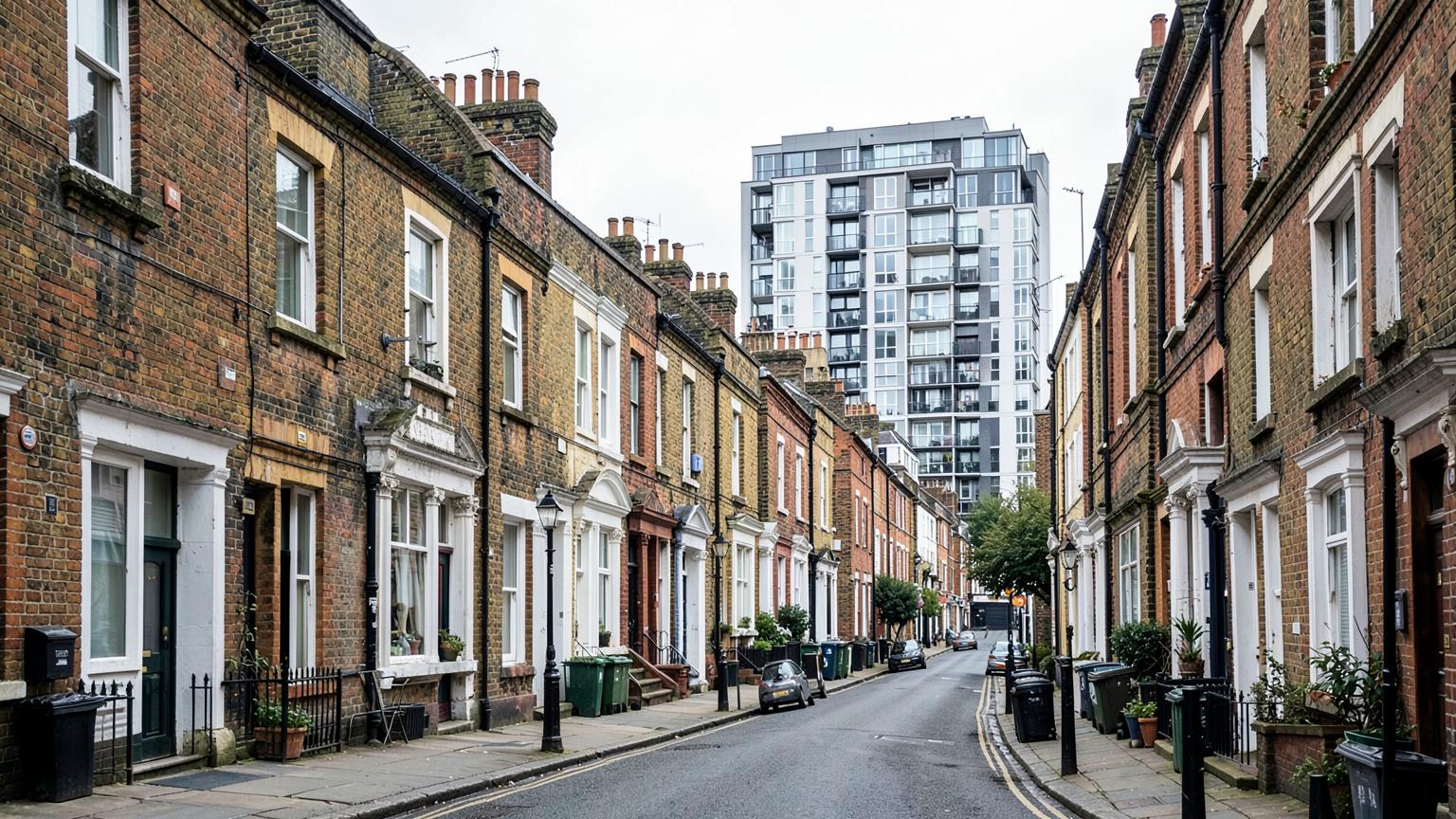




Housing stock in Camden
Camden's stock is dominated by Georgian and Victorian terraces subdivided into flats, most built with solid nine-inch brick walls that cannot take standard cavity insulation and single-glazed sashes that are frequently listed or in a conservation area, so double glazing is not always an option. Around King's Cross and Euston that period stock sits alongside denser post-war and newer mixed-use blocks with better-specified heating and glazing. Hampstead and Belsize Park add large detached and semi-detached houses split into a handful of flats, often with loft extensions that add floor area without corresponding loft insulation. Camden Town and Kentish Town have a substantial number of converted flats above shops still heated by older gas boilers, which typically assess in band D or E on RdSAP.
Landlord rules and licensing in Camden
Camden's private rented sector must meet the Minimum Energy Efficiency Standards, currently requiring at least an E rating before a property can be let, with government proposals to raise this to C for new tenancies by 2030. A valid EPC is also needed to register an HMO licence in Camden's additional licensing areas, and listed or conservation-area status across much of the borough can limit retrofit options such as external wall insulation or replacement glazing, so always confirm the current licensing position and any heritage constraints with Camden Council before committing to upgrade works.
What we commonly find here
- Solid nine-inch brick walls with no practical cavity to fill in Georgian and Victorian terraces
- Original single-glazed timber sash windows retained under conservation-area or listing restrictions
- Older gas boilers approaching or past their expected service life in converted flats
- Loft conversions added without corresponding insulation upgrades to the remaining roof area
- Communal or individual electric heating in top-floor conversions pulling the rating down to D or E
- Draughty original front doors and unsealed floorboards in period conversions increasing heat loss
Working in Camden
Parking around Camden Town, King's Cross and Bloomsbury is largely controlled, so we allow extra time to find a bay or use nearby pay-and-display; most of the borough sits inside the Congestion Charge zone as well as ULEZ. We price travel from our Wembley base by actual driving distance, with the central London access charge applying once inside the Congestion Charge boundary. A domestic EPC visit typically takes 20-45 minutes depending on the size and layout of the flat, and we work with managing agents across the borough's converted stock to arrange access to communal doors where needed. Certificates are lodged on the national EPC Register the same or next working day, with same-day appointments available on request.
King's Cross and Euston's mixed-use towers
The redevelopment around King's Cross and Euston has stacked residential floors above retail, office and station-adjacent commercial units, so an EPC for one of these flats has to reflect a building where communal heating, shared plant and glazing specification were designed as part of a single scheme rather than added piecemeal. Several of the newer blocks are served by a communal heat network, and for RdSAP purposes we need accurate details of the heat interface unit and any metering arrangement, since this materially affects the calculated rating. Loading bays and servicing yards behind the Regent Quarter and Coal Drops Yard developments do not affect the assessment itself, but access to plant rooms and heat network risers sometimes needs coordinating with the managing agent before our appointment.
Hampstead and Belsize Park's large converted houses
The large detached and semi-detached Victorian and Edwardian houses across Hampstead and Belsize Park were built with solid brick walls and generous room heights, and most have never had cavity wall insulation because there is no cavity to fill, which keeps the wall element of the SAP calculation weighted towards the property's original fabric. Many of these houses are now split into three, four or five flats, each requiring its own EPC when sold or let, and the assessment for a lower-ground flat with a lightwell needs an accurate record of its own heating system and glazing rather than assuming it matches the upper flats. Loft conversions added over successive ownerships often bring improved roof insulation that lifts the top-floor flat's rating relative to the rest of the building.
- Solid-wall Victorian and Edwardian houses without a cavity to insulate
- Lower-ground and loft-converted flats needing their own individually accurate EPC record
Camden Town and Kentish Town's shops with flats above
Camden Town's markets and Kentish Town Road carry a dense run of takeaways, bars and retail units with residential flats stacked above, a pattern that repeats along Chalk Farm Road and Royal College Street. Each of these uses needs its own EPC: a domestic RdSAP assessment for the flat, and a separate commercial EPC for the shop or restaurant unit below, since the two are assessed under different methodologies and cannot be combined into one certificate. We check which heating system actually serves each unit, as older parades sometimes have shared boiler arrangements from before the building was split into separate lettings, which needs recording accurately for both certificates.
- Separate domestic and commercial EPCs required for flats above shops
- Shared or historic boiler arrangements needing accurate attribution to each unit
What an EPC costs in Camden
Indicative EPC prices in Camden
| Property | Typical scope | Price from |
|---|---|---|
| Georgian terrace flat, Bloomsbury or Camden Town | Domestic EPC, RdSAP assessment | from £50 |
| Large converted house flat with basement, Hampstead or Belsize Park | Domestic EPC, RdSAP with individual heating and glazing survey | from £55 |
| Flat above shop or restaurant, Camden Town or Kentish Town | Domestic EPC for the flat only | from £50 |
| Shop or restaurant unit, Camden Town or Kentish Town | Commercial EPC | from £150 |
| Mixed-use block, King's Cross or Euston | Domestic EPC including communal heat network assessment | from £65 |
| HMO conversion, Kentish Town or Gospel Oak | Domestic EPC for HMO licence application | from £45 |
When you need an EPC in Camden
A valid Energy Performance Certificate is required before a home in Camden is marketed for sale or let, and it lasts ten years. Under the Minimum Energy Efficiency Standard a rented home must reach at least band E, and the government has proposed raising that to band C for rented homes by 2030, so a current certificate is also the starting point for planning upgrades. New builds and material conversions need SAP calculations at design stage and an on-completion EPC, and commercial premises need a non-domestic certificate produced on the same basis.