
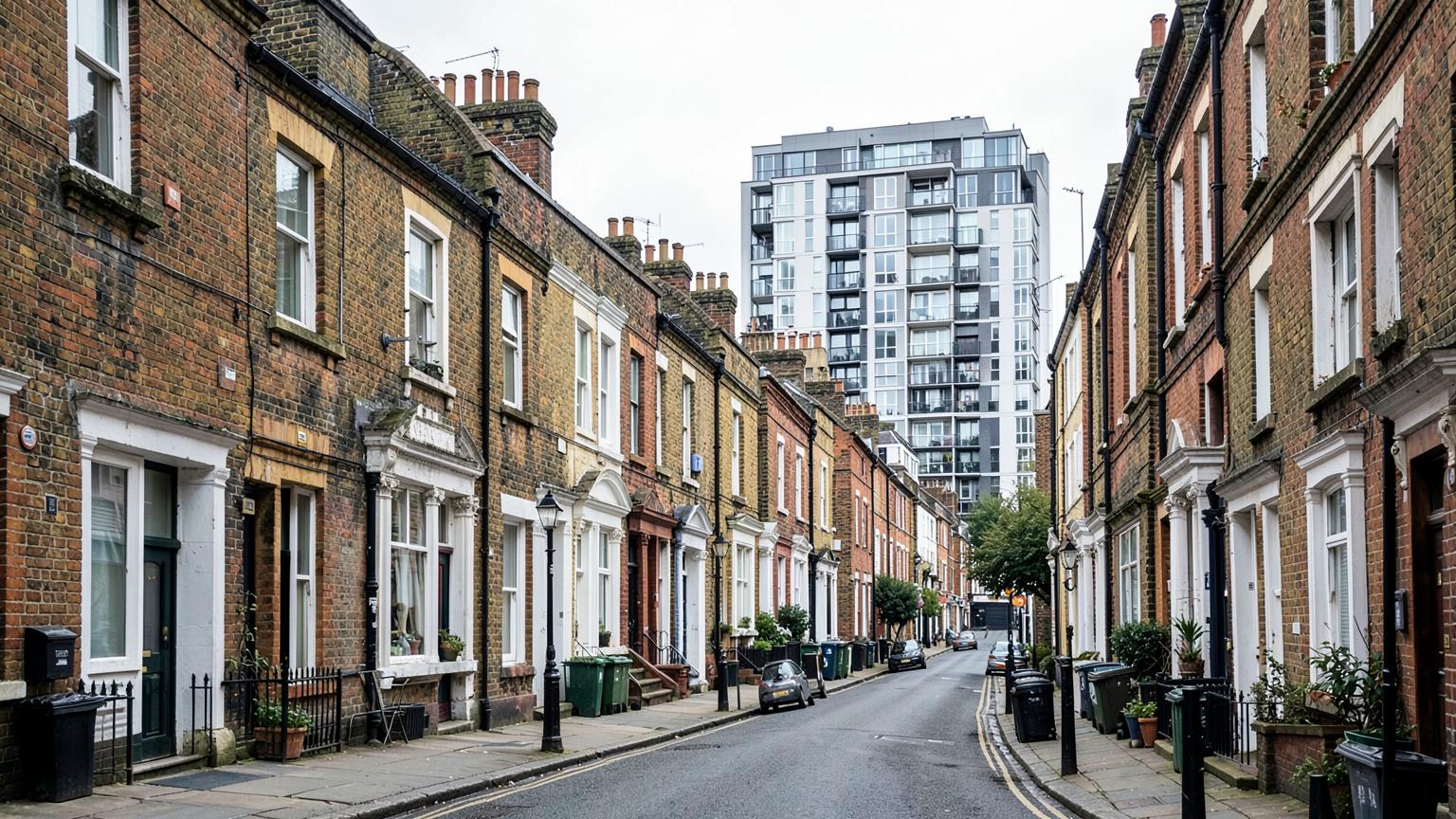




Housing stock in Hackney
Victorian and Edwardian terraces converted into flats dominate Dalston, Stoke Newington and Clapton, typically solid-walled with a loft conversion added over the years that is not always matched by insulation upgrades. Shoreditch and Hackney Wick contain a significant number of former industrial warehouses converted to residential use, often with exposed brick or steel and large single-glazed windows that are expensive to bring up to modern efficiency standards. Post-war estate blocks are concentrated around Hoxton and De Beauvoir, generally low to mid-rise with concrete or brick construction and communal or individual electric heating. Newer purpose-built development has grown fastest around Hackney Wick and the fringes of the Olympic Park, typically assessing well above the borough average.
Landlord rules and licensing in Hackney
Hackney's private rented homes must meet the MEES minimum of band E, and the proposed move to band C for new lets by 2030 will affect a large share of the borough's Victorian conversions and warehouse units unless insulation and heating are upgraded. An EPC is required for HMO licences under Hackney's additional licensing scheme, and boundaries and conditions are periodically reviewed, so check the current position with Hackney Council before an application — we write our EPCs to support a licence submission regardless of which scheme currently applies.
What we commonly find here
- Solid Victorian walls in Dalston and Stoke Newington terraces with no cavity to fill
- Warehouse conversions in Shoreditch and Hackney Wick with large single-glazed windows and exposed structure
- Loft conversions without corresponding roof insulation upgrades
- Electric heating in estate blocks and converted flats keeping ratings at band D or E
- Older combi boilers approaching the end of their efficient service life
- New-build flats around Hackney Wick reaching band B or C under SAP
Working in Hackney
Dalston, Hoxton and Shoreditch are heavily controlled parking zones and much of the borough sits within ULEZ, so we typically pay-and-display or use a nearby car park. Travel is priced from our Wembley base on actual driving distance, with the central London access charge applying where relevant. A domestic EPC visit typically takes 20-45 minutes, and estate blocks managed directly by the council or a housing association are usually straightforward to access with prior notice to the caretaker. Certificates are lodged on the EPC Register the same or next working day.
Shoreditch and Hackney Wick's open-plan conversions
Former textile and print warehouses across Shoreditch and Hackney Wick were converted to loft-style residential and live-work use with large open floorplates, exposed brick and, in many cases, single-glazed industrial windows retained for character. These features push the RdSAP wall and glazing elements towards the lower end of the scale unless secondary glazing or internal wall insulation has since been added, and mezzanine sleeping platforms need their own floor area and heating recorded accurately rather than assumed to match the main living space below. Ground-floor units in these conversions are frequently let as studios, galleries or small workshops requiring a separate commercial EPC, distinct from the residential certificate for the loft above.
- Exposed brick and single-glazed industrial windows keeping ratings lower unless upgraded
- Ground-floor studio or workshop units needing a separate commercial EPC from the residential loft above
Dalston and Stoke Newington's terrace conversions
Dalston and Stoke Newington's Victorian terraces converted into two or three flats each remain the most common building type we assess in the borough, and the pattern is consistent: solid brick walls with no cavity to insulate, original sash windows often replaced with uPVC double glazing at some point, and individual gas combination boilers installed flat by flat rather than a single shared system. Kingsland Road and the parades around Stoke Newington Church Street add a run of shops with flats above, each needing its own domestic EPC for the flat and, where the shop changes hands or is re-let, a separate commercial EPC for the retail unit.
Hoxton and De Beauvoir's estate blocks
The low to mid-rise estate blocks around Hoxton and De Beauvoir generally have communal heating or, in older blocks, electric storage heating installed at construction and never converted, both of which need recording accurately since they affect the RdSAP calculation very differently from an individual gas boiler. Decades of individual leaseholder alterations mean double glazing, loft insulation and heating upgrades vary flat to flat within the same block, so we assess each flat on its own specification rather than assuming consistency across the building. Where a flat still relies on older electric storage heaters, this is often the single biggest factor holding its rating below band D or E.
What an EPC costs in Hackney
Indicative EPC prices in Hackney
| Property | Typical scope | Price from |
|---|---|---|
| Warehouse or live-work conversion loft, Shoreditch or Hackney Wick | Domestic EPC with floor area and glazing survey | from £55 |
| Victorian terrace conversion flat, Dalston or Stoke Newington | Domestic EPC, RdSAP assessment | from £50 |
| Shop or retail unit, Kingsland Road | Commercial EPC | from £150 |
| Estate block flat, Hoxton or De Beauvoir | Domestic EPC including heating system assessment | from £50 |
| HMO conversion, Clapton or Homerton | Domestic EPC for HMO licence application | from £45 |
When you need an EPC in Hackney
A valid Energy Performance Certificate is required before a home in Hackney is marketed for sale or let, and it lasts ten years. Under the Minimum Energy Efficiency Standard a rented home must reach at least band E, and the government has proposed raising that to band C for rented homes by 2030, so a current certificate is also the starting point for planning upgrades. New builds and material conversions need SAP calculations at design stage and an on-completion EPC, and commercial premises need a non-domestic certificate produced on the same basis.