
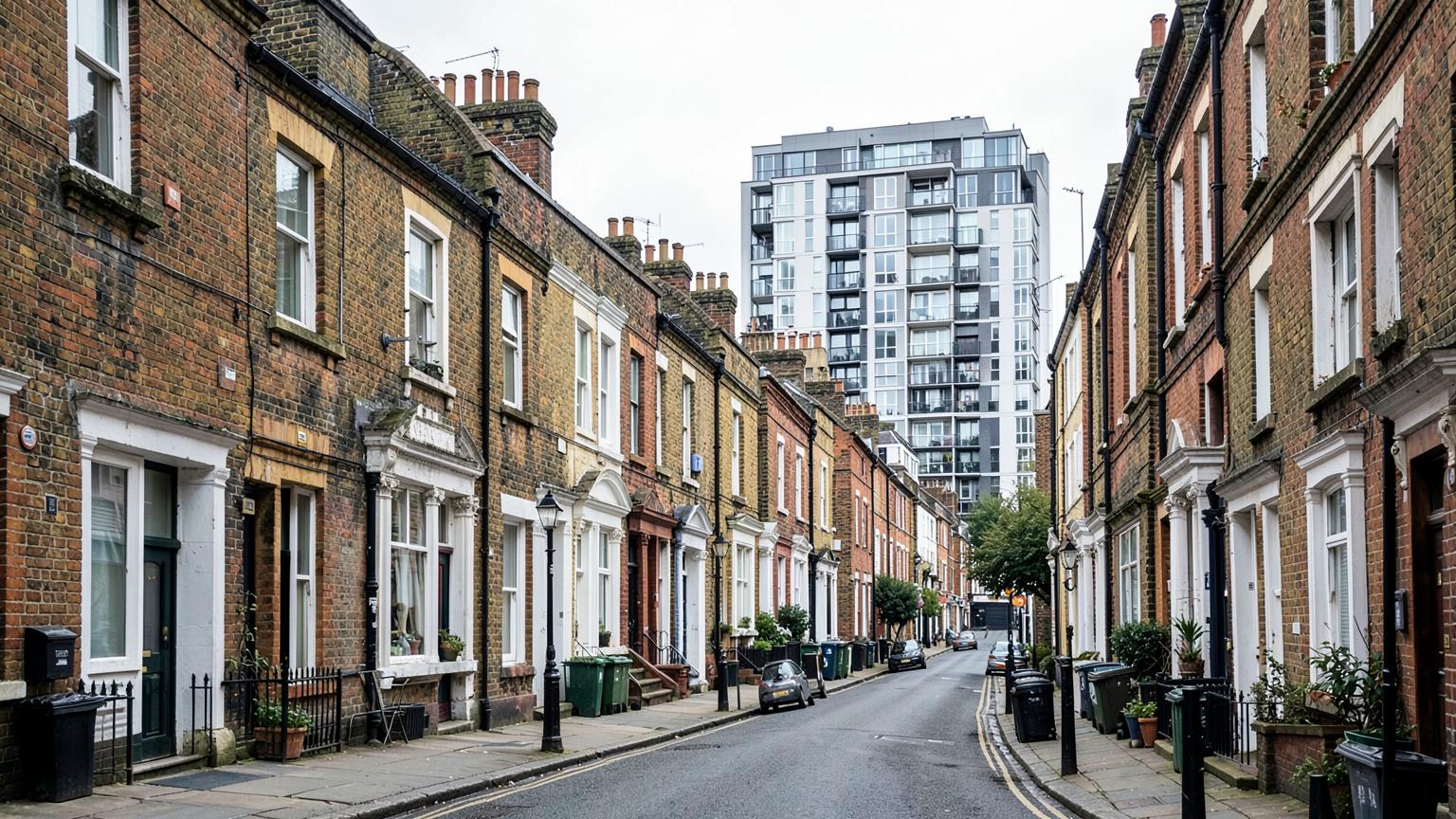




Housing stock in Haringey
Tottenham and Wood Green have dense stocks of Victorian and Edwardian terraces converted into flats and HMOs, a high proportion solid-walled with older gas boilers and single glazing, keeping many ratings in band D or E. Estate blocks in Tottenham Hale and Northumberland Park are generally low to mid-rise, built from the 1960s to 1980s, often with electric heating and insulation of varying quality depending on refurbishment history. Crouch End and Muswell Hill are more suburban, dominated by larger Victorian villas, many with cavity walls where extensions have been added but the original fabric remains solid. Wood Green town centre has also seen newer mixed-use residential development above retail in the last decade, typically achieving better ratings.
Landlord rules and licensing in Haringey
Haringey's rented properties must meet the MEES minimum of band E, and the proposed rise to band C for new tenancies by 2030 will affect a substantial share of the borough's Victorian HMO stock. An EPC is required for HMO licence applications, and Haringey operates additional licensing for HMOs across the borough and has run selective licensing in parts of Tottenham and Wood Green in the past — scheme boundaries and renewal dates should be confirmed with the council directly before an application, as these are periodically reviewed.
What we commonly find here
- Solid-walled Victorian HMOs in Tottenham with older gas boilers and single glazing
- Electric heating in Tottenham Hale estate blocks holding ratings at band D or E
- Loft extensions in Crouch End villas without a corresponding insulation upgrade
- Cavity walls in some Wood Green properties suitable for filling
- Communal heating systems in estate blocks assessed with limited individual controls
- New-build mixed-use development in Wood Green achieving better ratings than surrounding stock
Working in Haringey
Tottenham and Wood Green have moderate on-street parking availability outside peak hours, and the whole borough sits within ULEZ. Travel is priced from our Wembley base by actual driving distance. A domestic EPC visit is typically 20-45 minutes, and we confirm access to every letting room directly ahead of HMO visits rather than assuming an agent holds keys. Certificates are lodged on the EPC Register the same or next working day, which matters given how many of our Haringey visits are tied to live licence applications.
Wood Green and Tottenham's high street conversions
Wood Green and Tottenham High Road have a dense run of Victorian and early-20th-century buildings with retail at ground floor and flats or HMOs above, many let to a transient population near the Piccadilly and Victoria lines. The recurring EPC finding is a flat with solid brick walls, ageing single or early double glazing, and an individual gas boiler or, in some older conversions, electric storage heating that pulls the rating down noticeably compared with a modern combi installation. We assess each flat above a shop on its own construction and heating arrangement rather than assuming it matches the retail unit below, since the two are entirely separate for EPC purposes.
- Solid brick walls and mixed glazing ages recorded per flat
- Electric storage heating identified as a common rating constraint in older conversions
Hornsey and Crouch End's larger house conversions
Hornsey and Crouch End retain substantial Victorian and Edwardian villas, many converted into three or four flats to meet demand from the area's family and professional rental market. Loft conversions are common across this belt, and where a loft has been converted into a habitable flat we assess its roof insulation, window specification and heating supply as we would any other unit, since a loft flat with limited insulation depth can sit noticeably lower on the rating scale than the flats below it. Original decorative staircases and cornicing are frequently retained for character, though these have no bearing on the energy assessment itself, which focuses on the building fabric and services.
- Loft conversion flats assessed individually for roof insulation and glazing
- Heating supply arrangements checked flat by flat in subdivided villas
Tottenham Hale and the Broadwater Farm estate context
The regeneration around Tottenham Hale has brought new mid-rise residential blocks assessed under SAP for new build, alongside long-established post-war estates such as Broadwater Farm, where communal heating, concrete construction and later refurbishment all need recording accurately for an existing-dwelling RdSAP assessment. Refurbishment of these estates over the years — replacement windows, new communal boilers, external insulation — can move a flat into a noticeably better band once reflected in an updated EPC, so we always ask what retrofit work has taken place before the visit rather than relying on the previous certificate's figures.
What an EPC costs in Haringey
Indicative EPC prices in Haringey
| Property | Typical scope | Price from |
|---|---|---|
| Flat above shop, Wood Green or Tottenham High Road | Domestic EPC, sale or let | from £45 |
| Victorian villa converted to 3-4 flats, Hornsey or Crouch End | Domestic EPC per flat including loft conversion units | from £45 |
| Post-war estate flat, Tottenham Hale or Broadwater Farm area | Domestic EPC, communal heating and retrofit review | from £50 |
| HMO conversion, Tottenham or Wood Green | Domestic EPC per let unit, licence-ready | from £45 |
When you need an EPC in Haringey
A valid Energy Performance Certificate is required before a home in Haringey is marketed for sale or let, and it lasts ten years. Under the Minimum Energy Efficiency Standard a rented home must reach at least band E, and the government has proposed raising that to band C for rented homes by 2030, so a current certificate is also the starting point for planning upgrades. New builds and material conversions need SAP calculations at design stage and an on-completion EPC, and commercial premises need a non-domestic certificate produced on the same basis.