
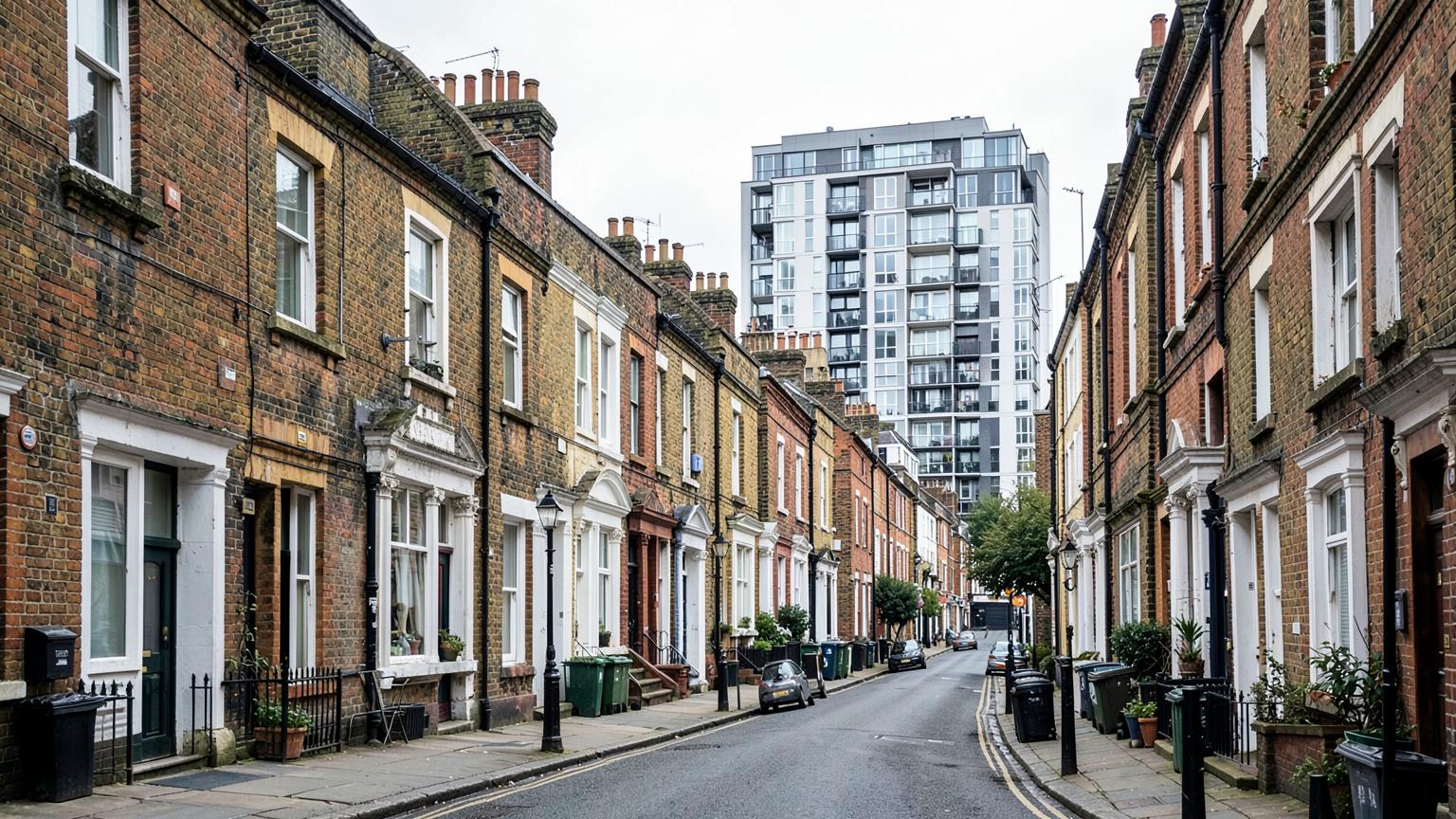




Housing stock in Westminster
The dominant form is the mansion block: red-brick or portland-stone purpose-built flats from the late Victorian and Edwardian periods, solid-walled, often with sash windows and communal or individual gas heating installed well after original construction. Pimlico and Marylebone add stucco-fronted terraces converted into flats, frequently listed, where solid walls and single glazing cannot be upgraded without heritage consent, keeping many assessments in band D. Soho and Victoria have residential upper floors above commercial premises, where flats often rely on older gas boilers and limited loft or roof insulation. New-build development is comparatively rare, concentrated around Victoria and the fringes of Paddington, and tends to assess considerably higher under SAP.
Landlord rules and licensing in Westminster
Westminster's rented flats must meet the MEES minimum of band E to be let, and landlords should plan ahead of the proposed tightening to band C for new tenancies by 2030 given how much of the borough's stock is solid-walled and listed. A valid EPC is required for any HMO licence application and for most mortgage or refinance decisions on rented property. Because so much of Westminster sits within conservation areas or has listed status, external insulation and window replacement are frequently restricted, so confirm the current licensing and heritage position with Westminster City Council before planning upgrade works.
What we commonly find here
- Solid brick or stone mansion-block walls with no cavity available for standard insulation
- Listed stucco terraces where single glazing cannot be replaced without heritage consent
- Communal gas heating systems in mansion blocks assessed as a shared system rather than per flat
- Older non-condensing boilers still in service in period conversions
- Loft or roof spaces above top-floor flats with historic or absent insulation
- Secondary glazing fitted as a compromise where full replacement is not permitted
Working in Westminster
Almost the whole borough sits inside both the Congestion Charge zone and ULEZ, and on-street parking in Mayfair, Soho and Marylebone is tightly controlled, so we typically use a nearby car park and factor that into the appointment. We price travel from our Wembley base on actual driving distance plus the central London access charge where applicable. A domestic EPC visit is usually 20-45 minutes, and porters or managing agents in mansion blocks can usually arrange access to communal areas and meter cupboards with advance notice. Certificates are lodged on the EPC Register the same or next working day.
Mayfair and Marylebone's listed mansion blocks
A significant proportion of Mayfair and Marylebone's mansion blocks sit within conservation areas or carry individual listing, which affects what retrofit options are realistically available even though an EPC is still required in exactly the same way as for any other flat. Listed status generally rules out external wall insulation and often restricts double glazing to secondary glazing behind the original sash windows, so our report notes which recommended measures are unlikely to gain listed building consent and focuses on lower-impact options such as draught-proofing, loft insulation where a loft exists, and heating controls. Porters in these buildings often hold decades of maintenance records, and reviewing boiler service history before the visit helps us record the heating system accurately.
Soho and Victoria's hotels above and beside residential floors
Soho's dense concentration of hotels, licensed premises and members' clubs frequently shares a building, or at least a party wall, with residential upper floors, and Victoria has a similar mix around the station and coach terminus. The hotel or club needs a commercial EPC of its own, assessed under SBEM rather than RdSAP, and the residential flats above need their own domestic certificates, so a single building can require several different EPCs held by different parties. We check which heating and hot water systems are genuinely independent between the commercial and residential elements, since a shared boiler serving both needs recording consistently across each certificate.
- Commercial SBEM assessment required separately for hotel, club or licensed premises
- Shared boiler or hot water systems needing consistent recording across residential and commercial EPCs
Pimlico's stucco terraces and communal gardens
Pimlico's grid of white stucco-fronted terraces, many converted into flats decades ago, were built with solid brick construction and originally coal or gas fires, since replaced in most flats with individual gas central heating or, in some conversions, electric storage heaters retained from an earlier refurbishment. Original panelled front doors and timber sash windows are protected by conservation area status, which limits window replacement options and keeps many flats reliant on secondary glazing or heavy curtains for draught reduction rather than full double glazing. We record the actual glazing and heating specification in each flat individually, since it varies considerably even within a single stucco terrace depending on when each flat was last refurbished.
What an EPC costs in Westminster
Indicative EPC prices in Westminster
| Property | Typical scope | Price from |
|---|---|---|
| Listed mansion block flat, Mayfair or Marylebone | Domestic EPC with heritage-constrained recommendations | from £55 |
| Stucco terrace conversion flat, Pimlico | Domestic EPC, RdSAP assessment | from £50 |
| Residential flat above or beside a hotel, Soho or Victoria | Domestic EPC for the flat only | from £55 |
| Hotel, club or licensed premises, Soho or Victoria | Commercial EPC, SBEM assessment | from £180 |
| Small purpose-built block flat, Paddington fringe | Domestic EPC, RdSAP assessment | from £45 |
When you need an EPC in Westminster
A valid Energy Performance Certificate is required before a home in Westminster is marketed for sale or let, and it lasts ten years. Under the Minimum Energy Efficiency Standard a rented home must reach at least band E, and the government has proposed raising that to band C for rented homes by 2030, so a current certificate is also the starting point for planning upgrades. New builds and material conversions need SAP calculations at design stage and an on-completion EPC, and commercial premises need a non-domestic certificate produced on the same basis.