
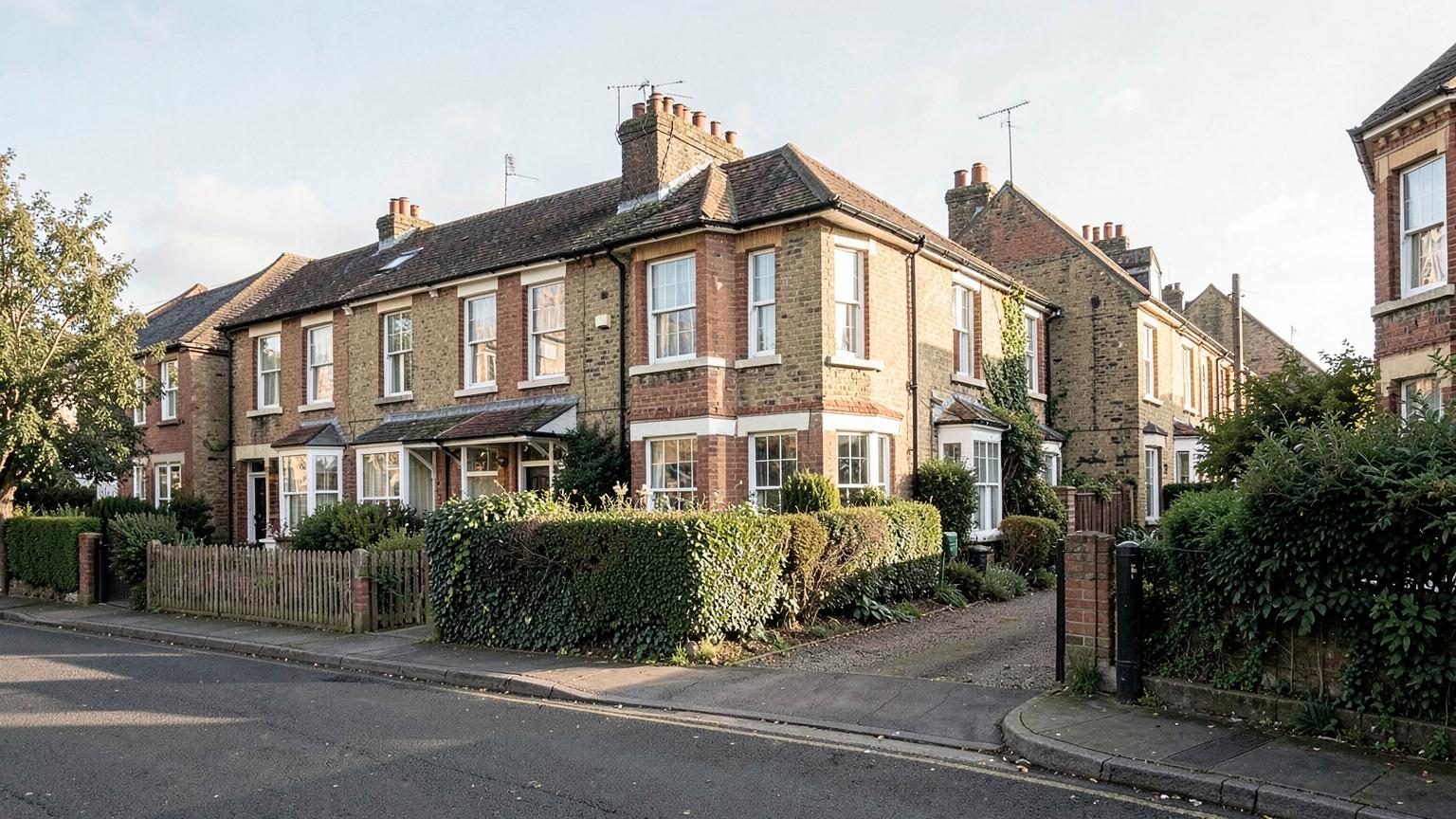




Housing stock in Barnet
Finchley, Hendon and Edgware are dominated by inter-war semi-detached and terraced housing, most with cavity walls that respond well to standard fill insulation, alongside purpose-built low-rise blocks of flats from the 1930s to 1970s. A growing number of these family houses near the North Circular and around Colindale have been converted into larger HMOs, sometimes with older heating systems that keep individual room ratings lower. Colindale itself has seen substantial new-build high-rise development over the last fifteen years, typically achieving band B or C under SAP, a marked contrast with the surrounding suburban stock. Barnet town centre and East Finchley retain smaller parades of shops with flats above, often solid-walled and older.
Landlord rules and licensing in Barnet
Barnet's rented properties must meet the MEES minimum of band E, with the proposed rise to band C for new tenancies by 2030 likely to be manageable for most of the borough's cavity-wall suburban stock through standard insulation measures. An EPC is required for HMO licence applications, and Barnet applies mandatory licensing to larger qualifying HMOs and has considered additional licensing for parts of the borough at various points, so the position for smaller shared houses should be checked directly with the council's private sector housing team before an application, since it can change.
What we commonly find here
- Cavity walls in inter-war semi-detached houses suitable for standard fill insulation
- Loft conversions adding bedrooms without a corresponding insulation upgrade
- Purpose-built 1930s blocks with original single-glazed windows never replaced
- Older gas boilers in family houses converted into HMOs
- New-build blocks in Colindale achieving band B or C
- Solid-walled flats above shops in Barnet town centre with limited insulation options
Working in Barnet
Barnet sits largely outside the ULEZ boundary except for its southernmost fringes, and on-street parking is generally straightforward outside the main town centres, which makes logistics easier here than in inner London. Travel is priced from our Wembley base by actual driving distance, and most Barnet addresses fall into a shorter travel band given the borough's proximity. A domestic EPC visit typically takes 20-45 minutes, and landlords who self-manage HMOs can usually confirm access to all bedrooms and lofts directly at booking. Certificates are lodged on the EPC Register the same or next working day, often booked faster here than in central London.
Colindale's new-build high-rise contrast
Colindale's transformation over the past fifteen years from low-density suburban land into a cluster of new-build high-rise residential blocks sits in sharp contrast to the surrounding inter-war stock, and these new flats are assessed under SAP at construction, typically achieving band B or above given current insulation, glazing and heating efficiency requirements. When a flat is resold, a fresh domestic EPC produced under RdSAP is needed, and this is usually a straightforward assessment given the recent, well-documented construction, though we still verify glazing, ventilation and heating specification directly rather than relying solely on the original SAP paperwork.
Finchley and Hendon's loft-converted semis
The inter-war semi-detached and terraced housing across Finchley, Hendon and Edgware was built with cavity walls that can usually be insulated relatively easily, one of the more cost-effective improvements available on this housing type, and many have already had cavity wall insulation installed, which we confirm rather than assume. Loft conversions added over the decades vary in how well the new roof space is insulated, and where a loft conversion has added a bedroom to a house already let as an HMO, this affects both the floor area used in the EPC calculation and potentially the HMO licensing position, both of which are worth checking together.
- Cavity walls in inter-war semis, often already insulated but worth confirming
- Loft conversions affecting both EPC floor area and HMO licensing thresholds
North Circular corridor HMOs
The stretch of Barnet nearest the North Circular, taking in parts of Cricklewood and Colindale's older streets, has seen growing demand for larger shared houses as transport links have improved, and landlords here have converted family houses into HMOs of five or more rooms at a faster rate than the borough's more established suburban areas. Because much of this conversion has happened relatively recently, we frequently find heating systems installed for an earlier, smaller household configuration, sometimes a single boiler undersized for the number of rooms now let, which does not itself change the EPC methodology but is worth noting to landlords alongside the certificate.
What an EPC costs in Barnet
Indicative EPC prices in Barnet
| Property | Typical scope | Price from |
|---|---|---|
| New-build residential block flat, Colindale | Domestic EPC, RdSAP assessment on resale | from £50 |
| Inter-war semi with loft conversion, Finchley or Hendon | Domestic EPC, RdSAP assessment | from £50 |
| Larger HMO, 5+ rooms, North Circular corridor | Domestic EPC for HMO licence application | from £55 |
| Purpose-built 1930s block flat, Edgware or Barnet town centre | Domestic EPC, RdSAP assessment | from £45 |
When you need an EPC in Barnet
A valid Energy Performance Certificate is required before a home in Barnet is marketed for sale or let, and it lasts ten years. Under the Minimum Energy Efficiency Standard a rented home must reach at least band E, and the government has proposed raising that to band C for rented homes by 2030, so a current certificate is also the starting point for planning upgrades. New builds and material conversions need SAP calculations at design stage and an on-completion EPC, and commercial premises need a non-domestic certificate produced on the same basis.