
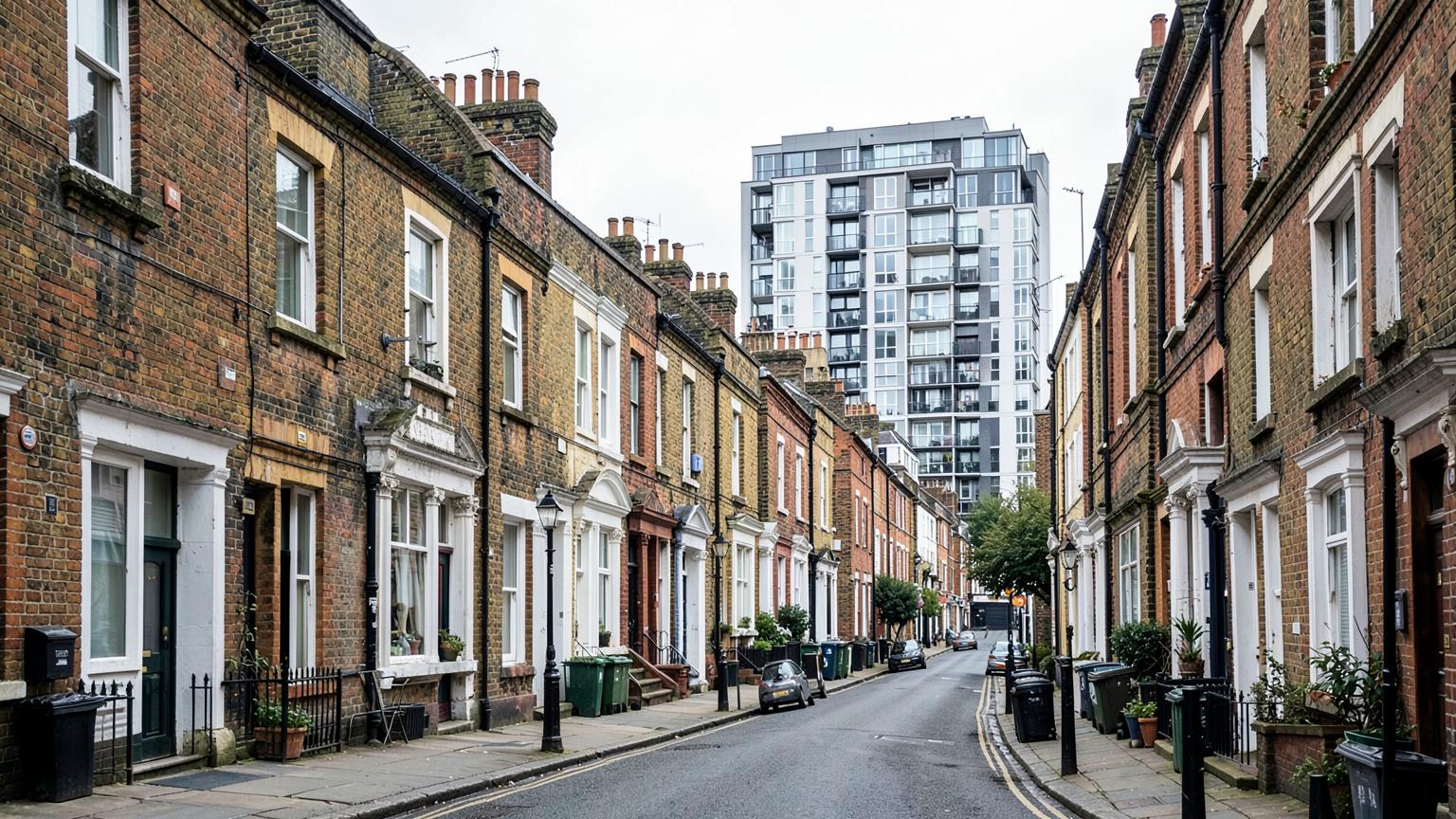




Housing stock in Lambeth
Brixton, Clapham and Streatham are dominated by large Victorian and Edwardian terraced houses, many converted into HMOs with shared kitchens and bathrooms, generally solid-walled with older gas boilers and single glazing that keep ratings around D or E. Stockwell and Waterloo add significant deck-access and system-built estate blocks from the 1960s and 1970s, often with electric or communal heating. Newer development is concentrated around Vauxhall and Waterloo, where taller residential towers typically achieve band B or C under SAP. Streatham and Tulse Hill retain a large stock of bay-fronted Victorian villas split into upper and lower maisonettes, again largely solid-walled.
Landlord rules and licensing in Lambeth
Lambeth's rented properties must meet the MEES minimum of band E, and the proposed move to band C for new tenancies by 2030 will be a significant undertaking for the borough's converted HMO stock. An EPC is required for every HMO licence application, and Lambeth runs additional licensing for HMOs across large parts of the borough and selective licensing in specific wards, though boundaries and conditions change over time — confirm the live position with Lambeth Council's licensing team before submitting an application.
What we commonly find here
- Solid-walled Victorian HMOs in Brixton and Streatham with older gas boilers
- Single glazing retained in many converted terraces, pulling the rating towards D or E
- Deck-access estate blocks with electric or communal heating and limited insulation
- Shared kitchens and bathrooms in HMOs affecting heat loss calculations across multiple rooms
- Rear extensions in maisonette conversions without matching insulation upgrades
- New-build towers near Vauxhall and Waterloo achieving band B or C
Working in Lambeth
Brixton and Clapham are busy controlled parking areas throughout the day and most of the borough sits within ULEZ. Travel is priced from our Wembley base by actual driving distance, with the central London access charge applying inside the Congestion Charge zone. A domestic EPC visit is typically 20-45 minutes, though HMO assessments needing internal access to every letting room can take longer, so we confirm access in advance with the landlord or agent. Certificates are lodged on the EPC Register the same or next working day, prioritised where a licence application is waiting on the result.
Brixton and Streatham's large converted HMOs
The five, six and occasionally seven-bedroom HMOs common across Brixton and Streatham were mostly converted from single large Victorian houses over several decades, and each of these HMOs needs a single domestic EPC covering the whole property, produced against the current layout rather than the house's original single-family configuration. Heating systems in these HMOs vary considerably, from a single central boiler serving the whole house to individual electric heaters installed room by room, and this is one of the main factors distinguishing a band E HMO from a band C one on otherwise similar Victorian stock. An EPC is required before the property is marketed or let and is also needed to support the HMO licence application.
- Whole-property domestic EPC required for HMOs, reflecting the current room layout
- Heating system, whether central or room-by-room electric, a major factor in the resulting rating
Stockwell and Waterloo's deck-access estates
The 1960s and 1970s deck-access estates around Stockwell and Waterloo were built with communal heating in many blocks, later converted to individual gas central heating in some flats but retained as communal or district heating in others, and confirming which arrangement applies to a specific flat is an important first step before the assessment. Where individual flats have had double glazing or loft insulation added under separate council or housing association improvement programmes, this needs recording against that specific flat rather than assumed to apply across the whole estate.
Vauxhall and Nine Elms' tall new-build towers
The cluster of new residential towers around Vauxhall and the Nine Elms riverside was built to current Building Regulations standards, with SAP calculations produced at construction and typically achieving band B or above given the combination of high-specification glazing, mechanical ventilation with heat recovery and, in several developments, a communal heat network drawing on combined heat and power plant. Where a flat is resold or re-let, a fresh domestic EPC is needed, and we cross-reference the original SAP assumptions against what is actually installed and in use, since fit-out changes by individual owners can occasionally affect the figures.
What an EPC costs in Lambeth
Indicative EPC prices in Lambeth
| Property | Typical scope | Price from |
|---|---|---|
| Large HMO, 5+ bedrooms, Brixton or Streatham | Domestic EPC for HMO licence application | from £55 |
| Deck-access estate flat, Stockwell or Waterloo | Domestic EPC including communal heating assessment | from £50 |
| New-build tower flat, Vauxhall or Nine Elms | Domestic EPC cross-referenced to original SAP assumptions | from £65 |
| Bay-fronted Victorian villa conversion flat, Tulse Hill | Domestic EPC, RdSAP assessment | from £50 |
| Small HMO conversion, Clapham | Domestic EPC for HMO licence application | from £45 |
When you need an EPC in Lambeth
A valid Energy Performance Certificate is required before a home in Lambeth is marketed for sale or let, and it lasts ten years. Under the Minimum Energy Efficiency Standard a rented home must reach at least band E, and the government has proposed raising that to band C for rented homes by 2030, so a current certificate is also the starting point for planning upgrades. New builds and material conversions need SAP calculations at design stage and an on-completion EPC, and commercial premises need a non-domestic certificate produced on the same basis.