




What is a domestic EPC and why is it a legal requirement?
An Energy Performance Certificate tells a buyer, tenant or owner how energy-efficient a home is and what it broadly costs to heat and light, on a scale from A (most efficient) to G (least efficient). Under the Energy Performance of Buildings (England and Wales) Regulations 2012, a valid EPC must be commissioned before a property is marketed for sale or rent, and made available to prospective buyers or tenants free of charge. It is a legal duty on the seller, landlord or their agent, not an optional extra, and estate agents will generally not advertise a property without one already ordered. New-build homes need one too, produced from the design and as-built data rather than a physical survey of an existing structure.
Who needs a domestic EPC?
Anyone selling or letting a home in England or Wales needs a valid EPC in place, and it applies just as much to a one-bedroom flat as to a large family house.
- Homeowners selling a house or flat
- Landlords letting a property for the first time or on renewal
- Developers completing new-build homes
- Housing associations and registered providers re-letting stock
- Conveyancers and estate agents needing one before marketing
- Homeowners remortgaging where the lender requests one
What our assessor does during the survey
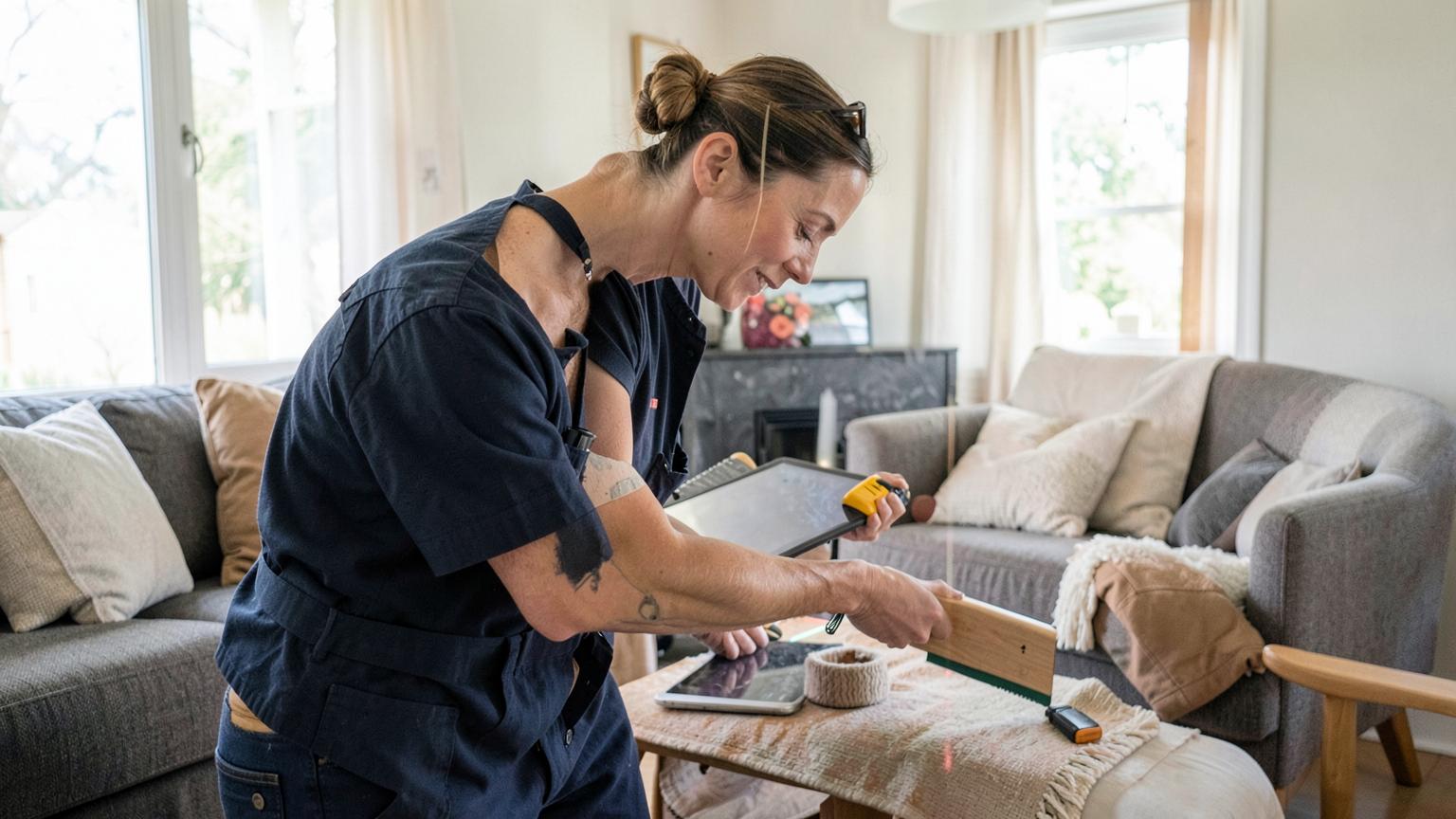
A domestic energy assessor visits the property and records everything RdSAP needs to model its energy performance: the dimensions and construction of each room, the walls, roof and floor construction, the glazing type, the heating system and controls, hot water provision, insulation levels wherever they are visible, and any renewable technology such as solar panels. The survey is non-intrusive — nothing is drilled, lifted or damaged — but the assessor will look in lofts, under stairs and at meter cupboards, so access to those areas on the day genuinely speeds things up. The data is then run through approved RdSAP software to produce the rating, the estimated running costs, and a set of tailored recommendations for improving the rating.
- Property dimensions and construction type
- Wall, roof and floor insulation where visible
- Windows and glazing type
- Heating system, controls and hot water source
- Low-energy lighting and any renewables fitted
- Recommendations report showing likely rating gains from improvements
What affects the price of a domestic EPC
Our starting price of £35 applies to smaller flats and straightforward properties. The main things that move the price upwards are the size of the property, the number of bedrooms and floors, whether it is a flat or a house, and how far it is from our Wembley base within our roughly 50-mile coverage area. A studio flat takes considerably less time to survey and model than a five-bedroom detached house with an extension and a converted loft, and we reflect that difference honestly rather than charging everyone the same flat fee. We confirm your exact price by postcode and property type before you book, so there is no surprise once the assessor has been round.
How long does it take, from booking to certificate?
Booking a domestic EPC with us is usually possible within a day or two, and same-day appointments are available where a completion date or marketing deadline is tight. The survey itself typically takes between twenty and forty-five minutes depending on the size of the property. Once the assessor is back from site, the data is checked, modelled and lodged on the EPC Register, and the certificate is normally emailed to you within 24 hours of the visit — often the same day for straightforward properties booked earlier in the day.
Common findings and easy wins we see
The most common reason a home scores lower than the owner expects is a heating system and controls that have not kept pace with modern standards — an old boiler without thermostatic radiator valves and a programmer, for instance, costs a home real points even if the fabric of the building is reasonably good. Loft insulation below the current recommended depth, single glazing, and un-insulated cavity walls are the next most frequent findings. On the upside, many of the cheapest improvements — topping up loft insulation, fitting a modern thermostat, switching to low-energy bulbs throughout — can move a property up a full band, and our recommendations report sets out exactly which changes would make the most difference for the effort involved.
How to prepare for your EPC survey
You do not need to do anything drastic, but a few small things make the visit quicker and the certificate more accurate. Clear access to the loft hatch, the boiler cupboard and any external meter boxes; have proof of any cavity wall insulation, double glazing installation, or renewable technology (such as an installation certificate) to hand if you have it, since the assessor will use documentary evidence where it exists rather than guessing; and let us know in advance if any room is not accessible on the day, so we can plan around it rather than have to return.
What happens after the survey — the certificate and recommendations
Once lodged, your EPC is a public record searchable on the government's Find an Energy Certificate service, valid for ten years unless the property changes substantially or a new certificate is produced. It shows the current rating, a potential rating if recommended improvements were carried out, and estimated energy costs. You can pass a PDF copy straight to your estate agent, conveyancer or letting agent, and it satisfies the legal requirement to make the certificate available to prospective buyers or tenants.
Why choose us for a domestic EPC
We are a Wembley-based team covering London, Hertfordshire, Middlesex and Berkshire, and domestic EPCs are the core of what we do rather than a sideline. Our assessors survey the property in person rather than relying on a desktop estimate, we quote a fixed price before booking, and we are rated 4.9 out of 5 from more than 100 reviews. If you also need fire risk assessment for a building you own or manage, our sister company Fire Risk Specialists covers that separately.
How RdSAP data collection actually works
A domestic EPC is produced using the Reduced Data Standard Assessment Procedure, RdSAP, which builds a model of the property from a physical survey rather than from the boiler or heating bill alone. The assessor measures every room, records the age band and construction of the walls, roof and floor, notes glazing type, and inspects the heating system, controls and hot water arrangement, then enters this into approved RdSAP software that calculates the rating. Because the model relies on defaults for anything it cannot verify, evidence matters enormously: a cavity wall insulation guarantee, loft insulation depth left visible rather than boarded over, boiler documentation, or double glazing FENSA certificates can each move the model away from a conservative default and towards the property's true performance. Where paperwork exists, having it ready on the day of the survey — rather than sent afterwards — lets the assessor apply it during the visit and avoids a second appointment or a corrected certificate later.
Why two assessors can produce different ratings
RdSAP is a methodology, not a single fixed answer, and small differences in judgement between two competent assessors are normal rather than a sign either has made an error. Differences most often arise from how a room's construction age band is judged where a property has been extended or altered, how insulation is assessed where it cannot be directly seen, and how a non-standard heating system such as a heat pump or electric storage heaters is categorised within the software's fixed list of options. A rating that seems low compared with a neighbour's similar property is usually explained by a genuine difference in fabric or evidence available, not a mistake, and the right response is to ask the assessor to show their working rather than to assume the certificate is wrong. We record every input against a photograph so a client can see exactly why a particular value was used.
Lodgement and the EPC Register
Once the RdSAP calculation is complete, the certificate is lodged electronically onto the national EPC Register, which is operated on behalf of the government and searchable at find-energy-certificate.service.gov.uk using the property's postcode or the certificate's reference number. Lodgement is not optional and happens automatically as part of a proper assessment; a certificate that has not been lodged does not legally exist even if a PDF has been produced and sent to a client. Once live, the certificate is valid for ten years unless superseded by a newer one, and anyone — a prospective buyer, tenant, or the property owner — can retrieve it free of charge from the Register at any time, which is why we always confirm the reference number rather than relying on an emailed copy that could later be misplaced.
What to do with a wrong or expired certificate
If a certificate contains a factual error — the wrong number of bedrooms, a heating system that has since been replaced, or a recommendation that no longer applies — the fix is to commission a new assessment rather than to ask for the existing certificate to be edited, since the Register does not support retrospective changes to a lodged document. A new, corrected certificate simply supersedes the old one on the Register. Where a certificate has expired after ten years, or is approaching expiry ahead of a sale or new tenancy, the same applies: a fresh RdSAP survey is required, and improvements made to the property since the last assessment — new insulation, a replacement boiler, solar panels — should be evidenced at that visit so the new rating reflects them properly rather than repeating out-of-date defaults.
- Wrong details on an existing certificate: commission a fresh assessment, do not amend the old one
- Certificate over ten years old: treat it as expired for sale or letting purposes
- Recent improvements not reflected: bring evidence to the new survey
- Always confirm the EPC Register reference, not just a saved PDF
Access and preparation for the survey
A typical RdSAP survey takes between thirty and sixty minutes depending on the size and layout of the property, and runs faster and more accurately when the assessor can see everything without obstruction. Loft hatches should be accessible and, where safe, the loft itself reachable to check insulation depth; the meter cupboard, boiler and any immersion heater or storage heater controls should not be blocked by furniture; and any paperwork for insulation, glazing, heating or renewable installations should be laid out rather than searched for during the visit. Tenanted properties need the tenant informed in advance and, ideally, present or willing to grant access, since a locked room or an unavailable resident on the day usually means a return visit rather than an incomplete certificate.