
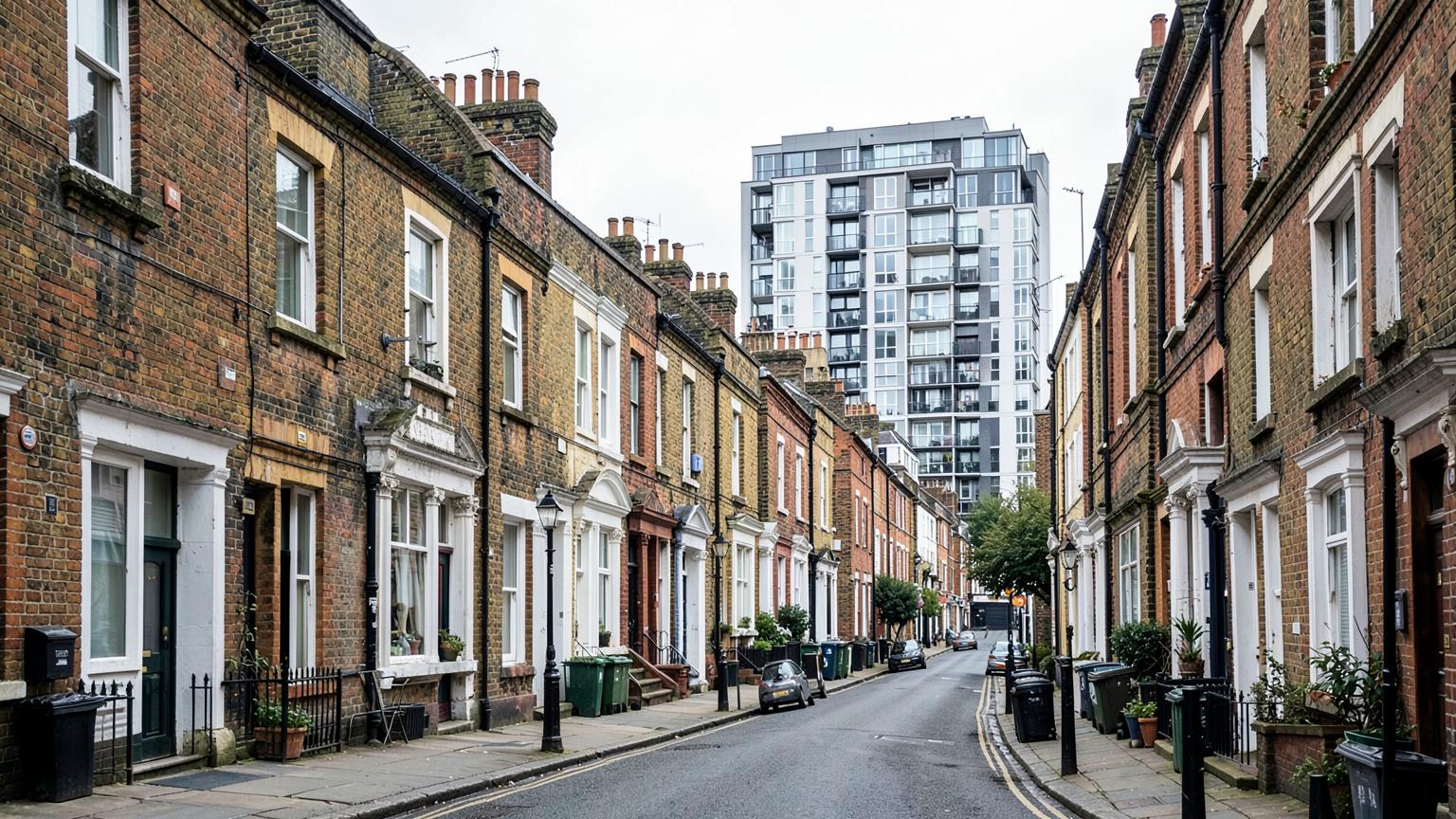




Housing stock in Greenwich
Greenwich town centre and Blackheath retain large numbers of Georgian and Victorian buildings, many listed or in conservation areas, generally solid-walled with limited scope for external insulation. Charlton and Woolwich have substantial Victorian terrace conversion stock, while Woolwich and the riverside have seen extensive high-rise regeneration over the past two decades, typically achieving band B or C. Eltham and the eastern wards are more suburban, with 1930s cavity-wall housing and some larger purpose-built blocks that generally respond well to standard insulation.
Landlord rules and licensing in Greenwich
Rented properties in Greenwich must meet the MEES minimum of band E, with the proposed rise to band C for new tenancies by 2030 a real consideration for the borough's listed and conservation-area terraces. An EPC is required for HMO licence applications, and Greenwich operates additional licensing for HMOs across the borough and has run selective licensing schemes in the past. Confirm the current boundary and renewal date with Greenwich Council before submitting an application, and note that listed or conservation-area status may limit retrofit options in the older parts of the borough.
What we commonly find here
- Solid-walled Georgian and Victorian buildings in Greenwich town centre with limited insulation options
- Woolwich high-rise regeneration blocks achieving band B or C under SAP
- Victorian terrace conversions in Charlton with older gas boilers
- Cavity walls in Eltham houses suitable for standard fill insulation
- Loft conversions in period houses without a corresponding insulation upgrade
- Communal heating systems in estate blocks assessed with shared meters
Working in Greenwich
Greenwich sits within ULEZ, and parking around Greenwich town centre, Woolwich and Blackheath is controlled and busy, so we generally allow extra time for parking and access. Travel is priced from our Wembley base by actual driving distance. A domestic EPC visit is typically 20-45 minutes, and riverside and Woolwich regeneration blocks are often managed by professional teams with detailed building information. Certificates are lodged on the EPC Register the same or next working day.
Greenwich Peninsula's new-build residential cluster
Greenwich Peninsula has grown into one of London's larger new-build residential clusters over the past two decades, with towers and mid-rise blocks built in phases around a shared masterplan, several linked to a district energy centre that supplies heating and hot water communally. Establishing which phase's SAP design data applies to which specific building, and how the district energy centre's efficiency is reflected in each flat's predicted energy cost, is usually the first task on a Peninsula assessment, and we ask for the relevant phase's energy specification before the visit wherever it exists.
- Multiple masterplan phases each requiring their own SAP design reference
- District energy centre efficiency reflected in individual flats' predicted costs
Woolwich's historic and regenerated stock
Woolwich combines former Royal Arsenal buildings converted to residential use — large-span industrial and munitions buildings adapted with new internal partitions — with newer development built around the Elizabeth line station and the town centre's ongoing regeneration. The converted Arsenal buildings bring genuinely unusual construction for RdSAP purposes: thick masonry or cast-iron framed walls, high ceilings, and glazing fitted into openings originally designed for an industrial building, all of which we record from what is actually on site rather than assuming a standard residential specification.
Eltham and Blackheath's period conversions
Eltham and Blackheath retain substantial Victorian and Edwardian housing, much of it split into flats, alongside some of the borough's larger detached houses converted into three or four self-contained units near Blackheath village. As with similar period conversion stock elsewhere, solid walls and an individually installed heating system per flat are the starting point for most assessments, and loft conversions adding a third storey are checked for their own roof insulation and glazing rather than assumed to match the flats below.
- Solid walls and individually installed heating recorded per flat
- Loft conversions checked for their own roof insulation and glazing
What an EPC costs in Greenwich
Indicative EPC prices in Greenwich
| Property | Typical scope | Price from |
|---|---|---|
| New-build flat, Greenwich Peninsula | SAP calculation and EPC, phase-specific new-build | from £75 |
| Converted former Arsenal building flat, Woolwich | Domestic EPC, non-standard construction review | from £55 |
| Victorian terrace conversion, Eltham or Blackheath | Domestic EPC, solid wall construction | from £45 |
| New-build flat near Elizabeth line station, Woolwich | SAP calculation and EPC, new-build residential | from £75 |
| HMO conversion, Woolwich or Eltham | Domestic EPC per let unit, licence-ready | from £45 |
When you need an EPC in Greenwich
A valid Energy Performance Certificate is required before a home in Greenwich is marketed for sale or let, and it lasts ten years. Under the Minimum Energy Efficiency Standard a rented home must reach at least band E, and the government has proposed raising that to band C for rented homes by 2030, so a current certificate is also the starting point for planning upgrades. New builds and material conversions need SAP calculations at design stage and an on-completion EPC, and commercial premises need a non-domestic certificate produced on the same basis.