
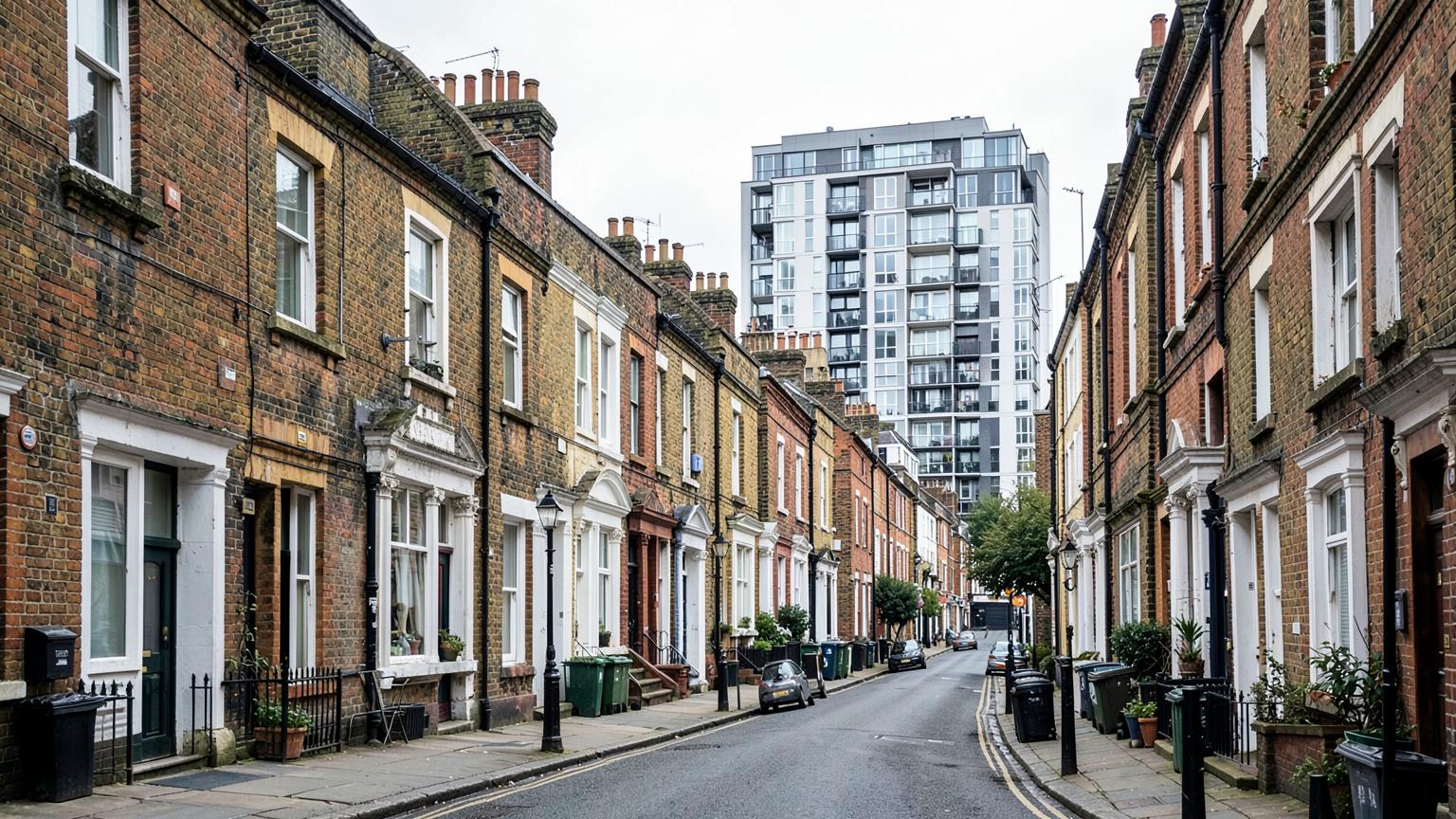




Housing stock in Southwark
Elephant and Castle, London Bridge and the riverside around Bermondsey have seen sustained high-rise regeneration, producing new residential towers with modern insulation and glazing that typically assess in band B or C, alongside older post-war estate blocks still awaiting refurbishment. Peckham and Camberwell retain large stocks of Victorian terraces converted into flats, many solid-walled with older gas boilers, often above shopfronts along Peckham Rye and Camberwell Church Street. Dulwich, by contrast, is dominated by larger detached and semi-detached houses, some with cavity walls suitable for insulation and others still solid-walled period stock. Mixed-tenure blocks — part leasehold, part social rent, sometimes part market rent — are common across the borough's regeneration sites.
Landlord rules and licensing in Southwark
Southwark's rented properties must hold an EPC of at least band E under MEES, with the proposed rise to band C for new tenancies by 2030 likely to affect a significant share of the borough's older estate and terrace stock. An EPC is required for HMO licence applications, and Southwark has run additional and selective licensing in defined areas in the past, so check the current scheme status with the council before an application. Where a building has mixed leasehold and rented tenure, it is worth clarifying who is responsible for commissioning the EPC before booking.
What we commonly find here
- New-build regeneration towers around Elephant and Castle reaching band B or C
- Post-war estate blocks with solid or poorly insulated panel walls
- Victorian terrace conversions in Peckham with older gas boilers and single glazing
- Cavity walls in some Dulwich houses suitable for retrofit insulation
- Electric storage heating in older estate flats keeping ratings at band D or E
- Loft or rear extensions altering floor area without a corresponding insulation upgrade
Working in Southwark
Elephant and Castle and London Bridge sit inside ULEZ and have limited on-street parking, so we typically use a nearby car park for those visits, while Dulwich and Peckham are easier for street parking outside peak hours. Travel is priced from our Wembley base by actual driving distance, with the central London access charge applying inside the Congestion Charge zone. A domestic EPC visit is typically 20-45 minutes, and concierge or estate management teams on regeneration sites can usually arrange access quickly. Certificates are lodged on the EPC Register the same or next working day.
Elephant and Castle's regeneration towers
The scale of regeneration around Elephant and Castle means new residential towers frequently sit directly alongside older estate blocks scheduled for refurbishment or eventual replacement, sometimes sharing a single development site with different phases completed years apart. New-build phases are assessed under SAP and generally achieve band B or higher given current insulation and heating efficiency standards, while the older estate blocks nearby are assessed under RdSAP and typically sit in bands D to E unless upgraded. Mixed-tenure arrangements here, part leasehold, part social rent, occasionally part market rent within the same block, do not change how the EPC is produced, but do mean we sometimes need the managing agent's input to confirm which heating system serves which flat.
Peckham and Camberwell's shopfront terraces
Peckham Rye and Camberwell Church Street carry a substantial run of Victorian terraces with retail below and flats or HMOs above, similar in character to the shopfront conversions found across several inner boroughs. Each retail unit needs a commercial EPC and each residential flat above needs a separate domestic certificate, and where a takeaway or restaurant has installed its own ventilation or heating system independent of the flats, this needs recording accurately on the commercial assessment rather than assumed to be shared with the residential floors.
- Separate commercial EPCs for food retail units distinct from the flats above
- Independent ventilation and heating systems in restaurants recorded accurately on the commercial assessment
Dulwich's larger converted houses
Dulwich, in contrast to the rest of the borough, is dominated by larger detached and semi-detached Victorian and Edwardian houses, many still in single-family occupation but a growing number converted into two or three flats to meet demand near the borough's schools and the South Circular corridor. Where a large house has been converted, rear and side extensions added since conversion often bring improved insulation standards under the extension's own building control approval, and recording this extended floor area and its construction accurately, separately from the original solid-wall fabric, is an important part of getting the RdSAP calculation right for each resulting flat.
What an EPC costs in Southwark
Indicative EPC prices in Southwark
| Property | Typical scope | Price from |
|---|---|---|
| New-build flat, Elephant and Castle regeneration scheme | SAP calculation for new build | from £75 |
| Older estate block flat, Elephant and Castle | Domestic EPC, RdSAP assessment | from £50 |
| Flat above food retail unit, Peckham or Camberwell | Domestic EPC for the flat only | from £50 |
| Food retail unit, Peckham or Camberwell | Commercial EPC | from £160 |
| Detached or semi-detached house conversion, Dulwich | Domestic EPC with extension floor area survey | from £60 |
| HMO conversion, Peckham Rye | Domestic EPC for HMO licence application | from £45 |
When you need an EPC in Southwark
A valid Energy Performance Certificate is required before a home in Southwark is marketed for sale or let, and it lasts ten years. Under the Minimum Energy Efficiency Standard a rented home must reach at least band E, and the government has proposed raising that to band C for rented homes by 2030, so a current certificate is also the starting point for planning upgrades. New builds and material conversions need SAP calculations at design stage and an on-completion EPC, and commercial premises need a non-domestic certificate produced on the same basis.