
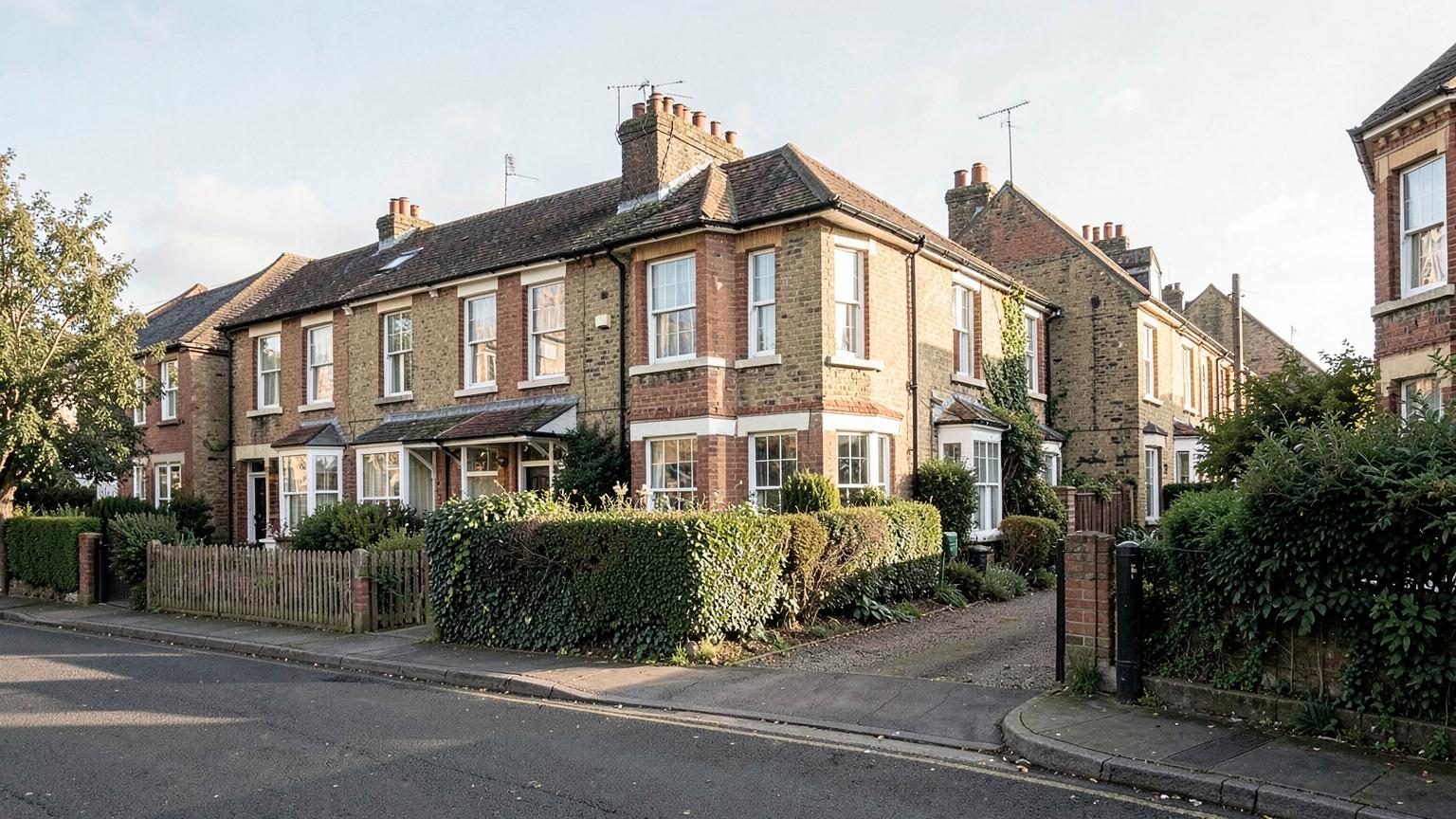




Housing stock in Barking and Dagenham
The borough mixes large 1920s and 1930s family houses — many now converted into flats or HMOs — with substantial post-war estate stock and newer regeneration schemes. Barking town centre has seen significant new-build residential development, typically achieving band B or C, while Dagenham and Becontree retain large areas of former council housing, often solid or cavity-walled depending on construction era and now under mixed ownership with varying levels of insulation upgrade. The conversion of family homes into five or six-bedroom HMOs is one of the fastest-growing segments we assess here, frequently with older heating still in place.
Landlord rules and licensing in Barking and Dagenham
Rented properties in Barking and Dagenham must meet the MEES minimum of band E, and the proposed rise to band C for new tenancies by 2030 will affect a meaningful share of the borough's converted 1920s and 1930s stock. An EPC is required for HMO licence applications, and the borough operates additional licensing for HMOs across the borough, reflecting the rapid growth in shared housing. Always confirm the current scheme boundary and renewal date with the council before submitting an application.
What we commonly find here
- 1920s and 1930s house conversions with cavity walls that can often be improved with insulation
- Older gas boilers still in place in converted HMOs
- Single glazing retained in some pre-war conversions
- New-build blocks near Barking town centre achieving band B or C
- Estate regeneration properties with mixed insulation standards depending on refurbishment history
- Loft conversions without a corresponding insulation upgrade
Working in Barking and Dagenham
Barking and Dagenham sits outside the ULEZ boundary and on-street parking is generally easier than in inner London. Travel is priced from our Wembley base by actual driving distance. A domestic EPC visit is typically 20-45 minutes, and landlords who self-manage HMOs can usually confirm access to every letting room at booking. Certificates are lodged on the EPC Register the same or next working day, prioritised where a licence deadline is involved.
Becontree's inter-war estate and its conversion pressure
The Becontree estate is one of the largest single areas of inter-war cottage housing in the country, built as a suburban low-rise estate with cavity walls that are among the more straightforward properties in outer London to insulate and improve. A meaningful share of the estate has since been split into flats or let as a small HMO, and where subdivision has taken place we assess each unit's own heating supply, since some houses were divided with a single boiler still serving the whole property while others have had an independent system fitted to each flat.
- Cavity wall construction offering realistic insulation improvement across the estate
- Shared versus independent heating supply checked per subdivided unit
Barking town centre and riverside regeneration
Barking town centre and the riverside development towards Barking Riverside have brought new mid-rise and high-rise residential blocks to the borough, several built as part of a long-term regeneration programme delivered in phases, each typically assessed under SAP using that phase's own energy specification. Because these developments are built in phases, a block completed several years ago can sit immediately next to one only recently handed over with a materially different specification, so we confirm which phase's design data applies to the specific property being assessed rather than assuming a uniform rating across the wider site.
Dagenham's industrial fringe and mixed occupancy
The industrial areas along the Dagenham riverside and towards Rainham have a mix of warehouse, light industrial and trade counter premises that need a commercial EPC when sold or let, assessed differently from domestic properties and covering factors such as roof lighting, heating and ventilation for the working space. Where a commercial unit includes any residential element, such as staff accommodation, that part is assessed separately as a domestic EPC, and we make clear in scoping the visit which certificate applies to which part of the building.
What an EPC costs in Barking and Dagenham
Indicative EPC prices in Barking and Dagenham
| Property | Typical scope | Price from |
|---|---|---|
| Becontree cottage house converted to 2-3 flats | Domestic EPC per flat, cavity wall and heating review | from £45 |
| 1930s semi-detached HMO, Becontree or Chadwell Heath | Domestic EPC per let unit, licence-ready | from £45 |
| New-build flat, Barking Riverside or Barking town centre | SAP calculation and EPC, phase-specific new-build | from £75 |
| Industrial or warehouse unit, Dagenham riverside | Commercial EPC | from £150 |
When you need an EPC in Barking and Dagenham
A valid Energy Performance Certificate is required before a home in Barking and Dagenham is marketed for sale or let, and it lasts ten years. Under the Minimum Energy Efficiency Standard a rented home must reach at least band E, and the government has proposed raising that to band C for rented homes by 2030, so a current certificate is also the starting point for planning upgrades. New builds and material conversions need SAP calculations at design stage and an on-completion EPC, and commercial premises need a non-domestic certificate produced on the same basis.